
Alexandrite
Curated by Maggie Liu · Updated:
About Alexandriteextended article
Alexandrite is the rare, colour-change gem variety of chrysoberyl (beryllium aluminium oxide). Trace chromium causes it to appear green to bluish-green in daylight and red to purplish-red under incandescent light — the celebrated 'emerald by day, ruby by night' effect. It was discovered in the Ural Mountains of Russia in the 1830s and named for the future Tsar Alexander II.
Properties
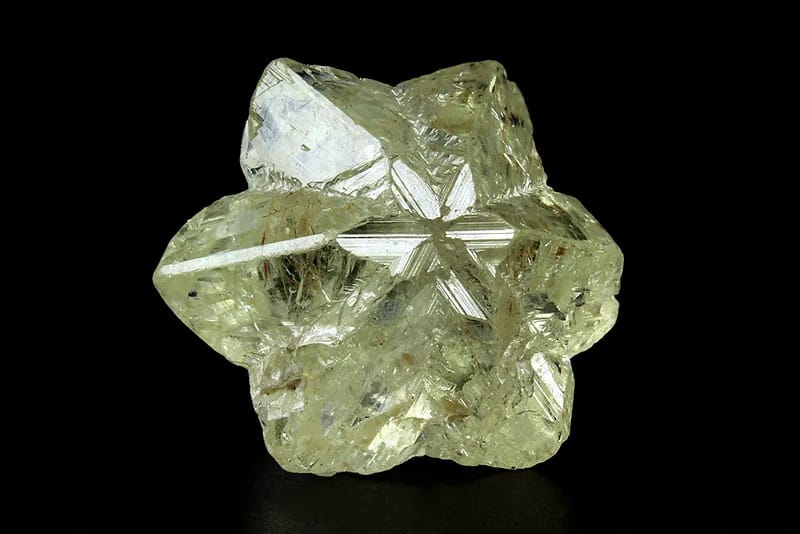
Chrysoberyl is orthorhombic, very hard (8.5) and durable, often forming characteristic cyclic 'trilling' twins. Alexandrite's value rests on the strength and completeness of its colour change as well as clarity and size; sharp change with vivid colours commands premium prices.
Occurrence
Beyond the classic Ural deposits, alexandrite is found in Brazil (Minas Gerais), Sri Lanka, Tanzania and Madagascar. Chrysoberyl also occurs as the chatoyant variety cymophane, or cat's-eye.
Frequently asked questions
What is the chemical formula of Alexandrite?
The chemical formula of Alexandrite is BeAl2O4.
What crystal system does Alexandrite belong to?
Alexandrite crystallises in the Orthorhombic crystal system.
Where is Alexandrite found?
Notable localities for Alexandrite include Ural Mountains.
Related minerals
Looking for a Alexandrite specimen?
Our inventory is one-of-a-kind and turns over quickly. Tell us what you're after — species, size, budget — and we'll notify you when a matching Alexandrite arrives from our sourcing network.
Request this mineral