
Chlorite
Curated by Maggie Liu · Updated:
Chlorite is a phyllosilicate mineral prized by collectors for its exceptional color range.
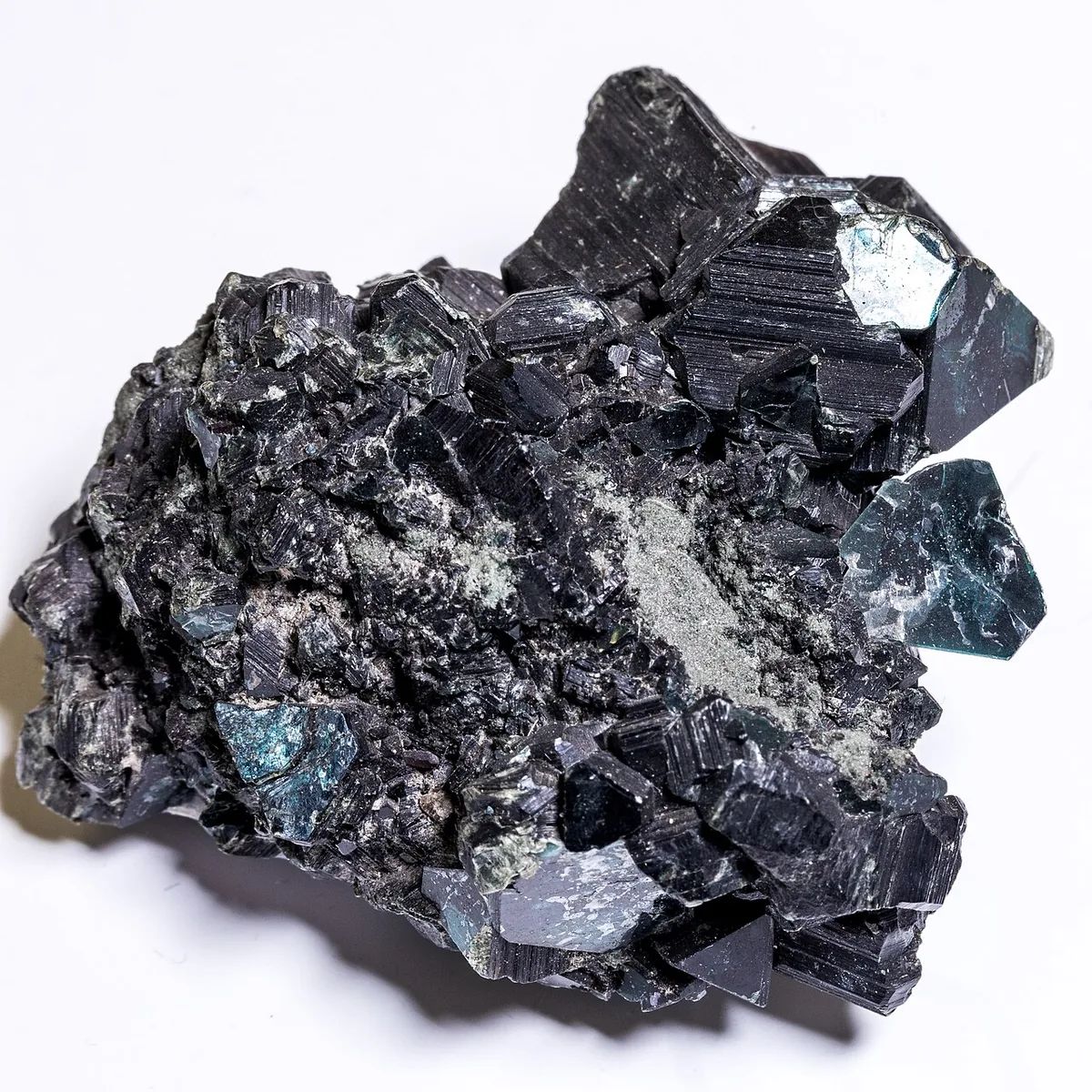
About Chlorite
Chlorite is a phyllosilicate mineral in the chlorite group and has the chemical formula (Mg,Fe,Al)6(Si,Al)4O10(OH)8. It crystallizes in the monoclinic system and is one of the most visually varied minerals in the collector market.
Identification & care
Specimens usually show scaly, foliated, platy; pseudohexagonal plates; fan-shaped rosettes; vermicular; massive. Its color range is broad, including green (most common), white, yellow, brown, and black. The luster is vitreous to pearly, dull, the streak is white to pale green, and specimens range from translucent to opaque. The cleavage is perfect basal {001}. The fracture is uneven, which aids identification.
Collector context
Collector notes
For collectors, Chlorite is a benchmark crystalline species.
Frequently asked questions
What is Chlorite?
Chlorite crystallises in the Monoclinic system, has a Mohs hardness of 2–3. Chlorite is a phyllosilicate mineral prized by collectors for its exceptional color range.
What crystal system does Chlorite belong to?
Chlorite crystallises in the Monoclinic crystal system.
Related minerals
Looking for a Chlorite specimen?
Our inventory is one-of-a-kind and turns over quickly. Tell us what you're after — species, size, budget — and we'll notify you when a matching Chlorite arrives from our sourcing network.
Request this mineral