Chrysocolla
Curated by Maggie Liu · Updated:
Chrysocolla is a silicate mineral prized by collectors for its exceptional color range, with notable Chinese occurrences.
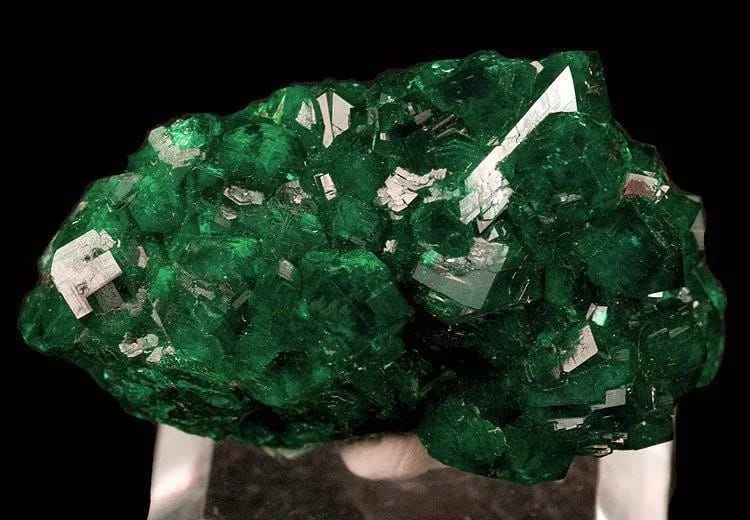
Chrysocolla is a blue-green copper silicate, a popular ornamental and collector mineral from oxidised copper deposits worldwide, including Bisbee and the Congo.
About Chrysocollaextended article
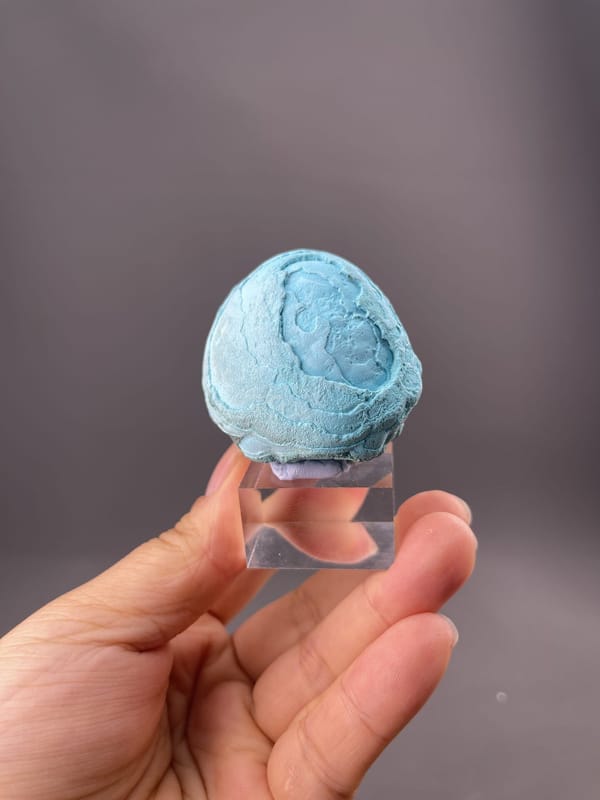
Chrysocolla is a hydrous copper silicate, valued above all for its intense blue to blue-green colour. It forms in the oxidised zones of copper deposits, usually as botryoidal crusts, vein fillings and earthy masses rather than crystals, and is often intergrown with quartz, malachite and other copper minerals.
Identifying chrysocolla
Pure chrysocolla is soft (about 2–4) and can be chalky, but it is frequently hardened by intergrown silica. The most prized material is 'gem silica' or chrysocolla chalcedony — chrysocolla-coloured chalcedony that is hard, translucent and takes a brilliant polish. Its vivid cyan-to-green colour, often mottled with brown or black, is distinctive; it can resemble turquoise but is generally softer unless silicified.
Where it is found
Fine chrysocolla comes from oxidised copper orebodies worldwide — Bisbee and other Arizona mines, the Katanga Copperbelt in the DR Congo, Peru and Israel (Eilat stone, a chrysocolla-turquoise mix).
For collectors and lapidaries
Intense, even blue-green colour and translucency drive value; gem-silica chrysocolla and aesthetic botryoidal chrysocolla with malachite or azurite are the most sought-after. Soft, un-silicified material is best kept as a specimen rather than worn.
About Chrysocolla
Chrysocolla belongs to the silicate class in the chrysocolla group and has the chemical formula Cu2-xAlx(H2-xSi2O5)(OH)4 · nH2O, x < 1. It crystallizes in the orthorhombic system and is one of the most visually varied minerals in the collector market. Its combination of structural character and global distribution make it a recognized species in both systematic and aesthetic collections.
Identification & care
Specimens usually show cryptocrystalline to amorphous botryoidal, stalactitic, and crusty aggregates; true crystals extremely rare (acicular to fibrous). Its color range is broad, including green, bluish-green, blue, blackish-blue, and rarely brown or yellow. The luster is vitreous, waxy, earthy, the streak is light green, and specimens are typically translucent, opaque. The cleavage is none observed. The fracture is irregular/uneven, sub-conchoidal, which aids identification.
Collector context
How it forms
The geological setting for Chrysocolla is typically secondary mineral in oxidized zones of copper deposits; often coats and replaces primary copper minerals; forms with malachite, azurite, and other copper secondaries. It is commonly found in association with malachite, azurite, cuprite, tenorite, turquoise, quartz.
Classic Chinese localities
Jiama Cu-polymetallic deposit is an important Chinese source for the species.
Why collectors care
Chrysocolla is a frequently-sought species in serious collections because its habit is recognizable, its color often strong, and its best examples unmistakable even at a distance. Chinese material has driven much of the recent visual shift in the species — sharper crystals, deeper colors, cleaner matrix.
What affects value
Value in Chrysocolla is assessed, in typical order of weight, against: (1) locality provenance; (2) size relative to the species norm; (3) crystal form and termination sharpness; (4) color saturation and zoning; (5) transparency and internal clarity; (6) matrix quality and aesthetic balance; (7) condition (absence of damage, chips, or repair). Cleaning quality and verified locality documentation act as multipliers across the above.
Naming history
Chrysocolla means "gold glue," from Greek chrysos and kolla. Theophrastus recorded the name around 315 BC for a material used as a flux in soldering gold. The blue-green copper silicate collectors buy today inherited a name that originally described a goldsmith's consumable.
Frequently asked questions
What is Chrysocolla?
Chrysocolla has the chemical formula Cu2-xAlx(H2-xSi2O5)(OH)4 · nH2O, x < 1, crystallises in the Orthorhombic system. Chrysocolla is a silicate mineral prized by collectors for its exceptional color range, with notable Chinese occurrences.
What is the chemical formula of Chrysocolla?
The chemical formula of Chrysocolla is Cu2-xAlx(H2-xSi2O5)(OH)4 · nH2O, x < 1.
What crystal system does Chrysocolla belong to?
Chrysocolla crystallises in the Orthorhombic crystal system.
Where is Chrysocolla found?
Notable localities for Chrysocolla include Tsumeb, Bisbee, Milpillas Mine.