Malachite
Curated by Maggie Liu · Updated:
Malachite is a carbonate mineral recognized among collectors for its crystal form and distribution, with several world-class Chinese localities.
About Malachiteextended article
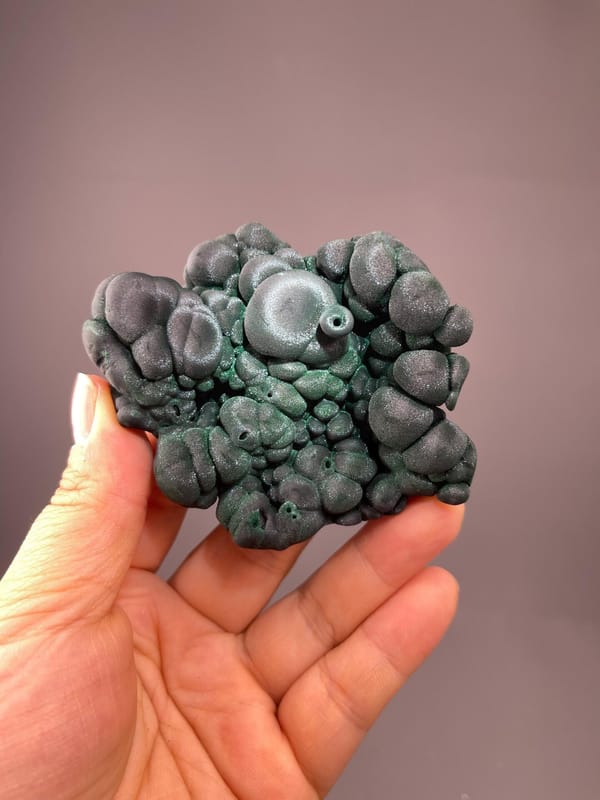
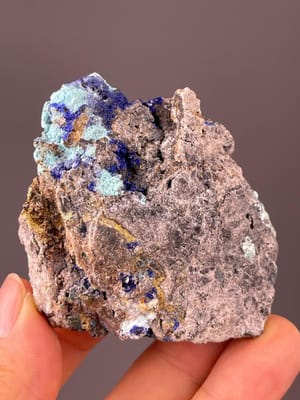
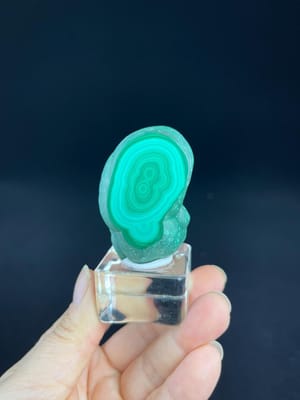
Malachite is a copper carbonate hydroxide and one of the most visually distinctive species in collecting – bright green botryoidal masses, banded slabs, and stalactitic clusters. It forms in the oxidized zone of copper deposits, almost always paired with its blue cousin Azurite (same elements, different hydration). Where Azurite is the upper-zone fresh signal, Malachite is the deeper-altered final phase. Russia's Tsar Hermitage carved entire columns from Ural malachite; ancient Egyptians ground it for green pigment.
Notable varieties
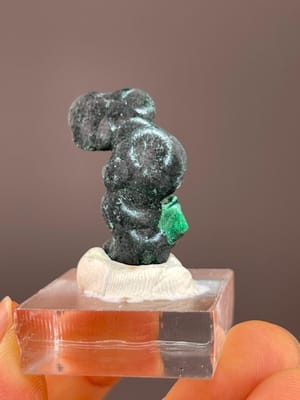
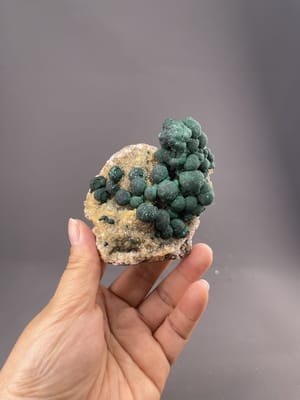
- Botryoidal (most common collector form; "grape" textures)
- Stalactitic (cave-formed columns and pendants)
- Pseudomorph after Azurite (square crystals replaced by green – Tsumeb, Bisbee)
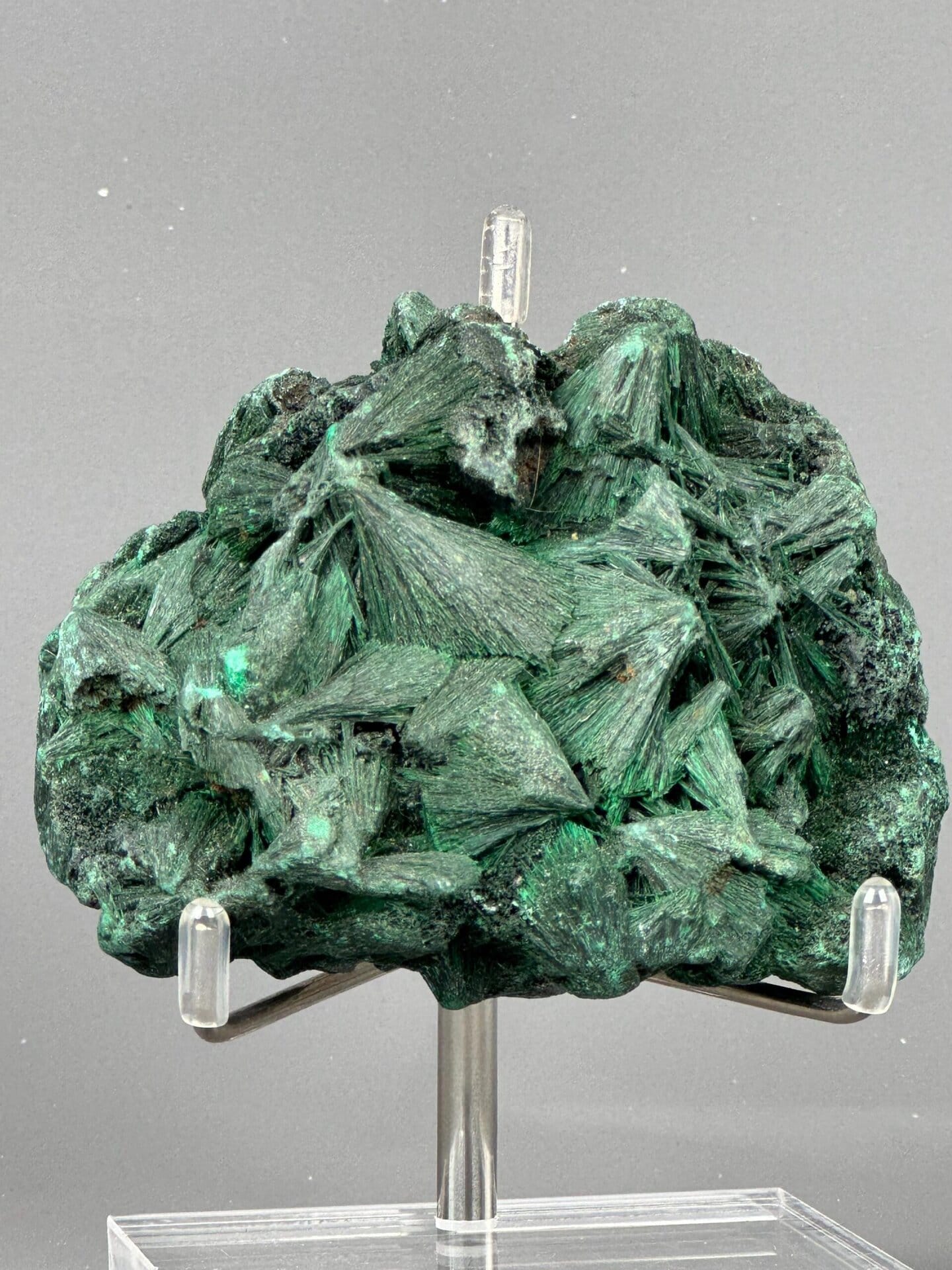
- Plumose (fibrous radiating sprays)
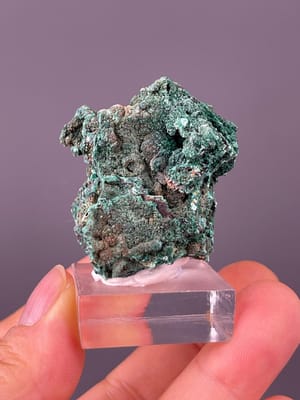
- "Azurmalach" (intergrowth with Azurite – dual color)
The Chinese angle
Yangchun in Guangdong produces some of the finest botryoidal Chinese malachite, with deep saturated green and well-formed spherical structures. Hubei (the same Cu-Fe skarn districts that produce Daye galena and pyrite) also yields collector malachite. Both pair frequently with Azurite, and combination matrix specimens are characteristic. Outside China, Katanga (DRC) and Tsumeb (Namibia) remain the global references.
About Malachite
Malachite is classified as a carbonate mineral in the malachite-rosasite group and has the chemical formula Cu₂(CO₃)(OH)₂. It crystallizes in the monoclinic system and holds a steady position among carbonate species. Its combination of structural character and global distribution make it a recognized species in both systematic and aesthetic collections.
Identification & care
Malachite typically forms botryoidal (grape-like), stalactitic, massive, tabular crystals, acicular. Its color is typically bright green, deeper/darker in crystal form and yellowish green in transmitted light. The luster is silky (fibrous), earthy, vitreous (crystals), the streak is light green, and specimens range from translucent to opaque. The cleavage is perfect on {201}. The fracture is subconchoidal to uneven, which aids identification.
Collector context
How it forms
In terms of geology, Malachite forms in secondary mineral in oxidized zones of copper ore deposits. It is commonly found in association with azurite, chrysocolla, cuprite, native copper, calcite.
Classic Chinese localities
Jiama Cu-polymetallic deposit and Dexing Cu-Mo-Au ore field are an important Chinese source for the species.
Why collectors care
Malachite is a frequently-sought species in serious collections because its habit is recognizable, its color often strong, and its best examples unmistakable even at a distance. Chinese material has driven much of the recent visual shift in the species — sharper crystals, deeper colors, cleaner matrix.
What affects value
Value in Malachite is assessed, in typical order of weight, against: (1) locality provenance; (2) size relative to the species norm; (3) crystal form and termination sharpness; (4) color saturation and zoning; (5) transparency and internal clarity; (6) matrix quality and aesthetic balance; (7) condition (absence of damage, chips, or repair). Cleaning quality and verified locality documentation act as multipliers across the above.
Naming history
Malachite is named for a plant, not a place or a person: Greek malache, the mallow, whose leaves are the same deep green. Ground malachite was the green eye-paint of ancient Egypt and the green pigment of European painting for centuries, and it is a copper ore besides — one of the first metals humans ever smelted.
Frequently asked questions
What is Malachite?
Malachite has the chemical formula Cu₂(CO₃)(OH)₂, crystallises in the Monoclinic system, has a Mohs hardness of 3.5–4. Malachite is a carbonate mineral recognized among collectors for its crystal form and distribution, with several world-class Chinese localities.
What is the chemical formula of Malachite?
The chemical formula of Malachite is Cu₂(CO₃)(OH)₂.
What crystal system does Malachite belong to?
Malachite crystallises in the Monoclinic crystal system.
Where is Malachite found?
Notable localities for Malachite include Yangchun, Guangdong, Tsumeb, Ural Mountains, Milpillas Mine, Bisbee.
Is Malachite rare?
As a collector mineral, Malachite is generally considered common.
Related minerals
Available Malachite specimens
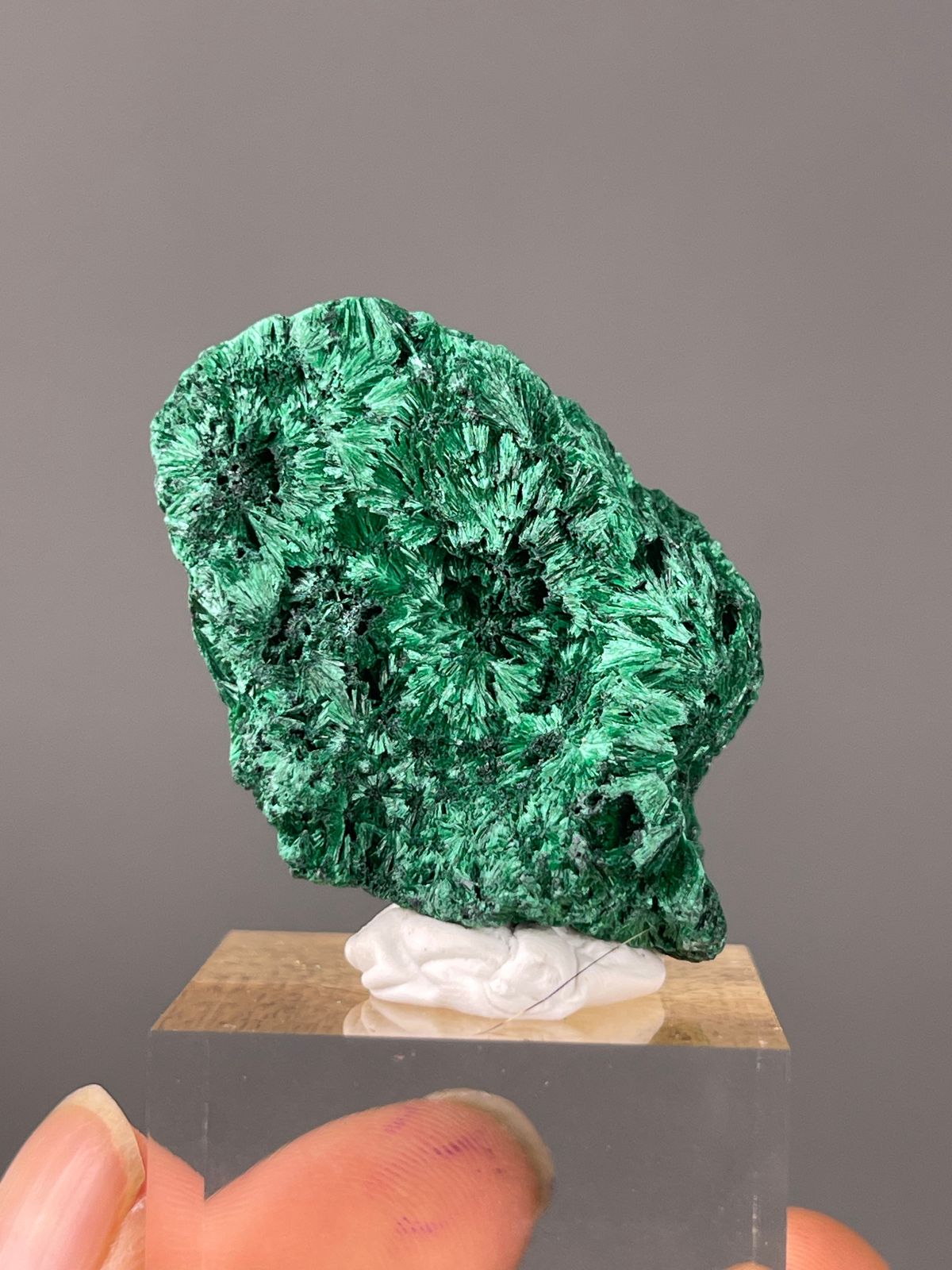
Needle-like Radiating Malachite — Yangchun, Guangdong, China
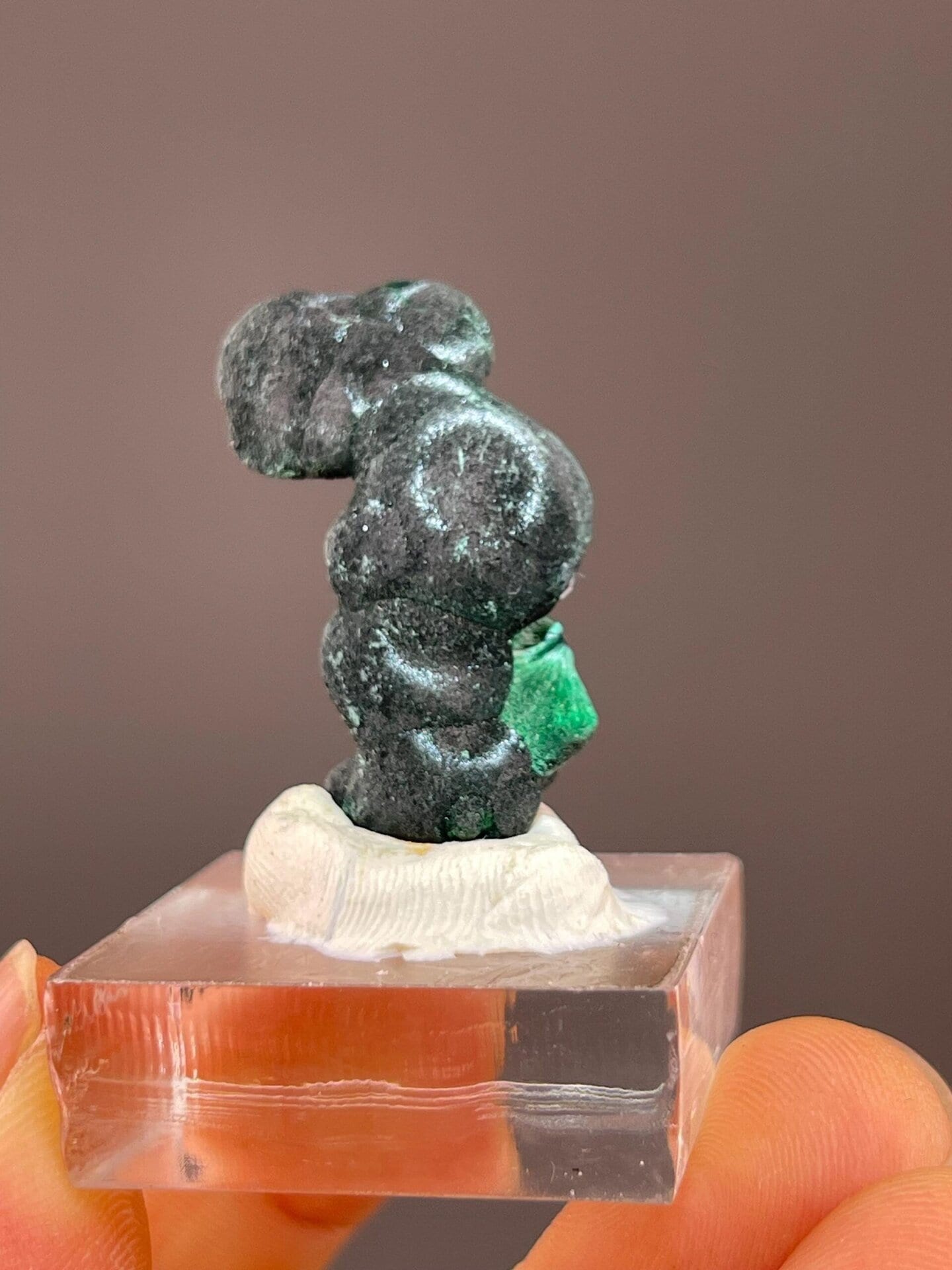
Botryoidal Malachite Specimen, Yangchun, Guangdong
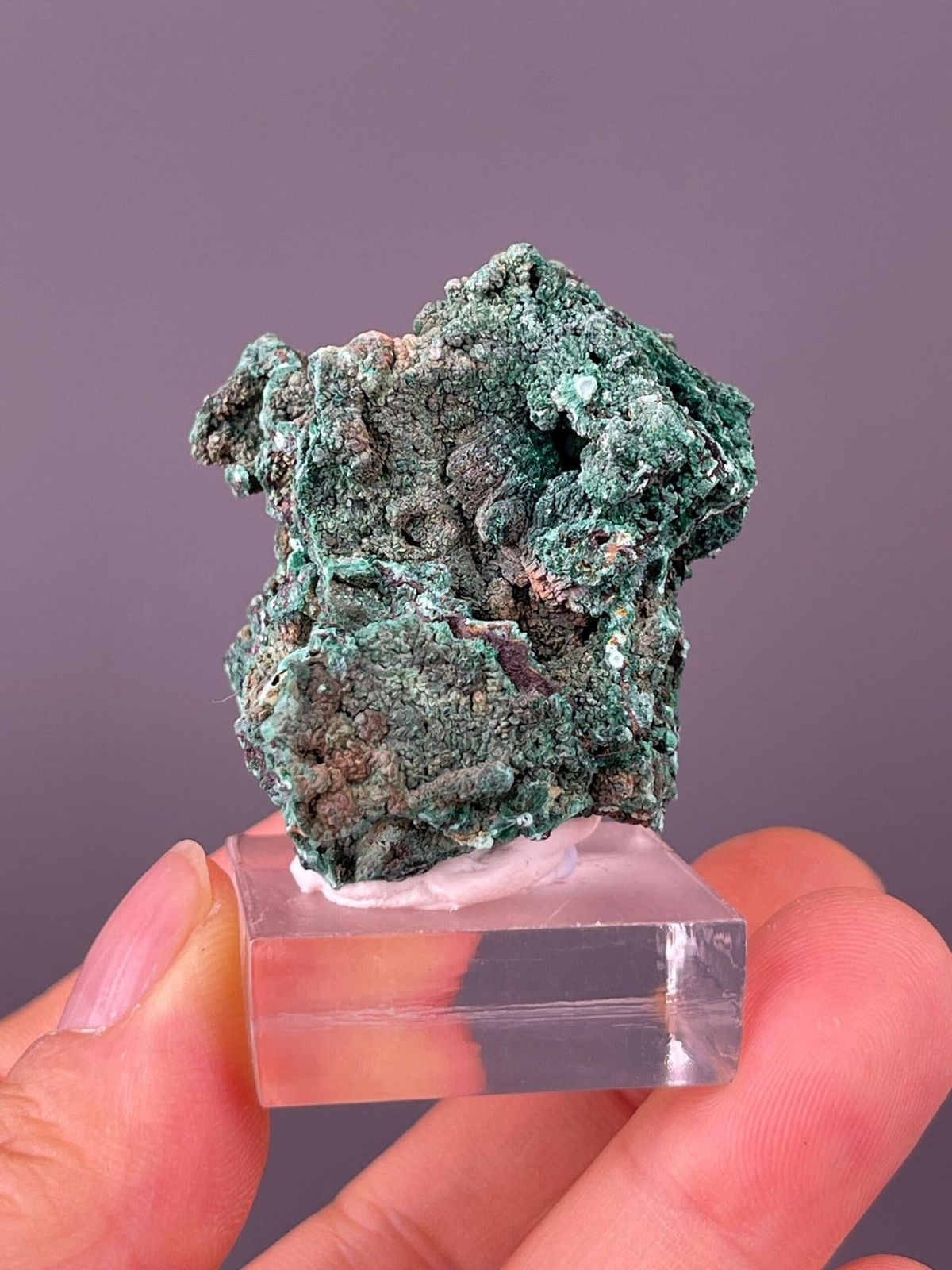
Velvet Malachite Crust on Matrix, China
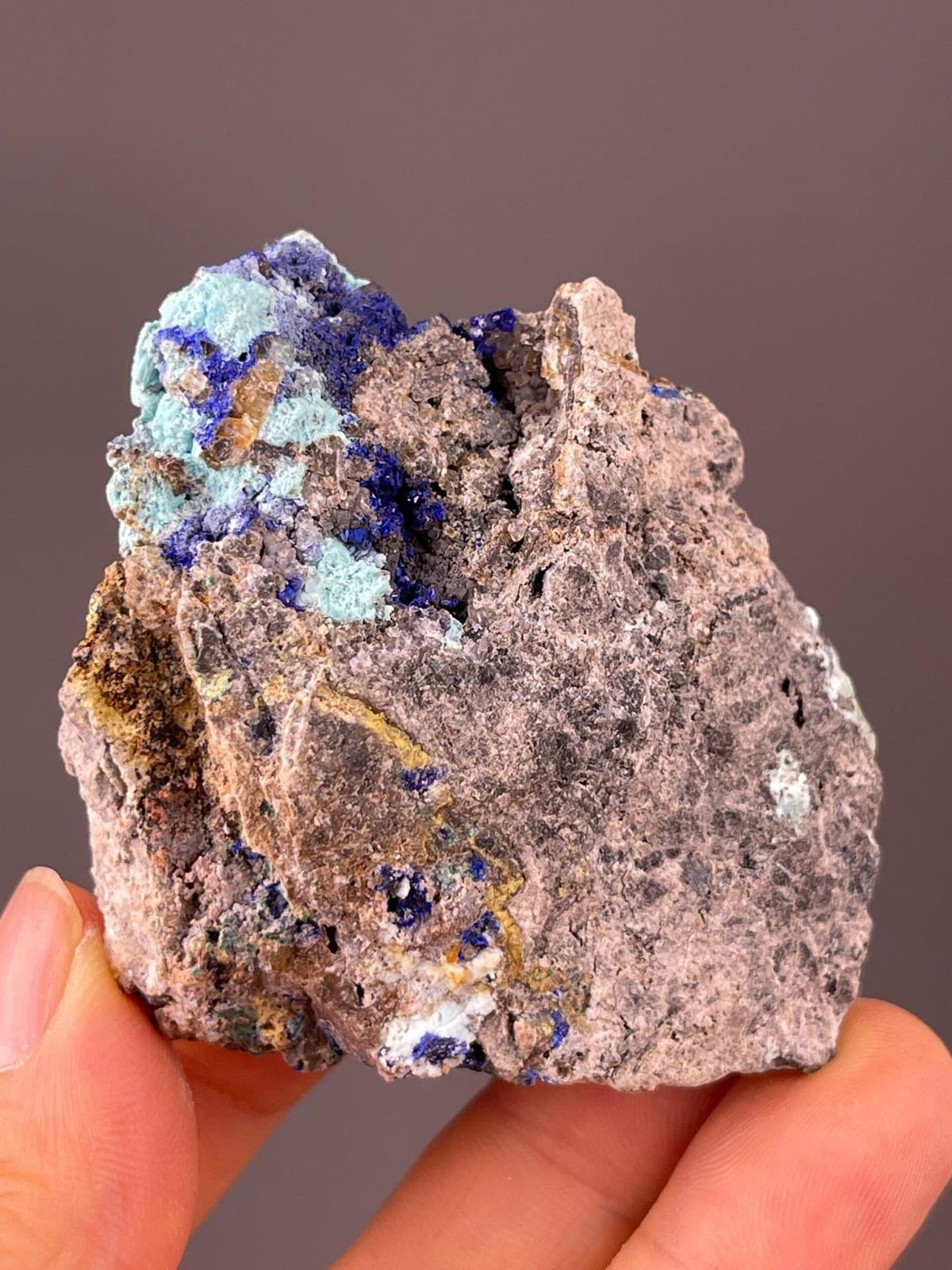
Azurite with Malachite on Matrix, China
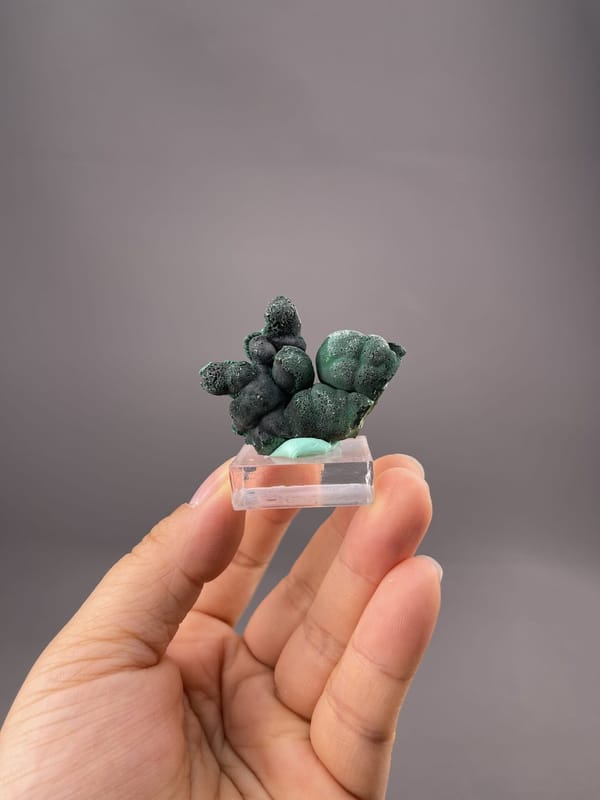
Malachite – Botryoidal Form – DR Congo
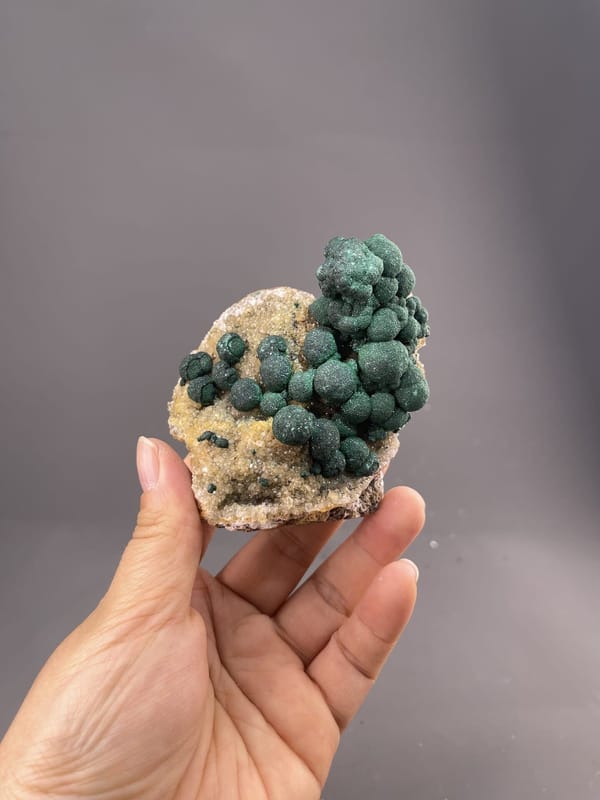
Malachite Specimen, DR Congo
Recently sold Malachite specimens
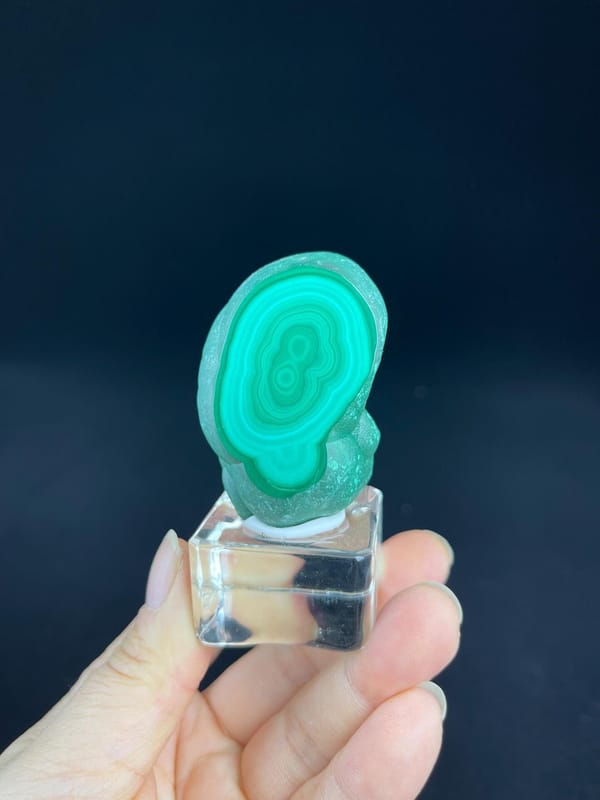
Malachite Specimen, Polished and Raw, DR Congo
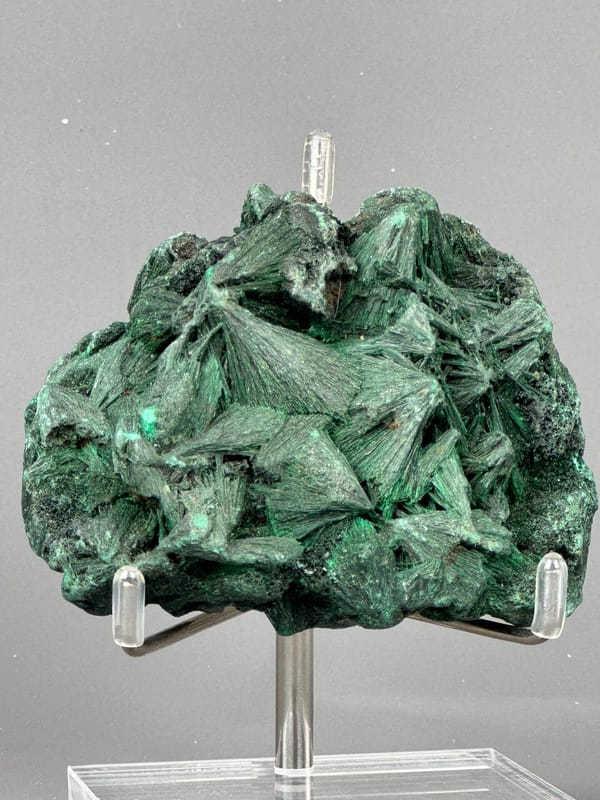
Malachite Needle Cluster, Yangchun, Guangdong
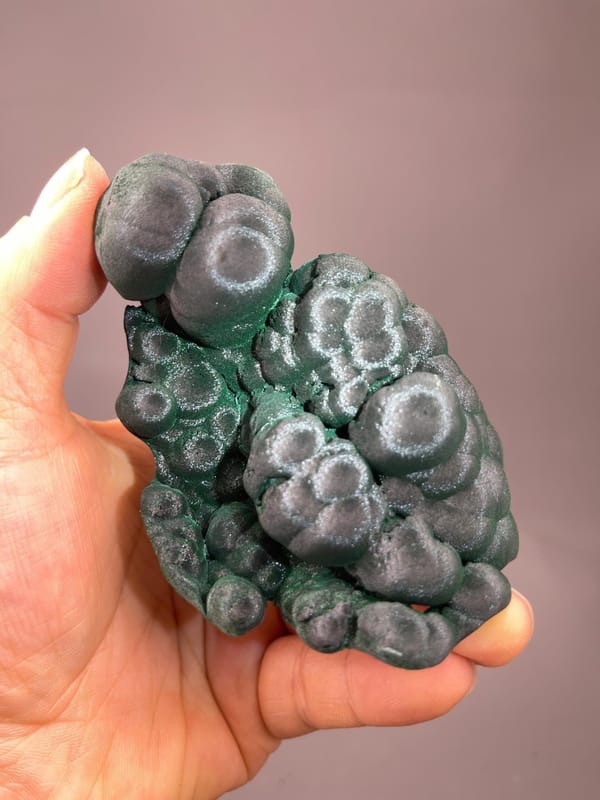
Botryoidal Malachite Cluster, Large, Yangchun, China