
Selenite
Curated by Maggie Liu · Updated:
Selenite is the transparent, glassy variety of gypsum (CaSO4 2H2O), often forming long prismatic or fishtail twin crystals. The Naica giant crystal cave in Mexico is the most famous occurrence.
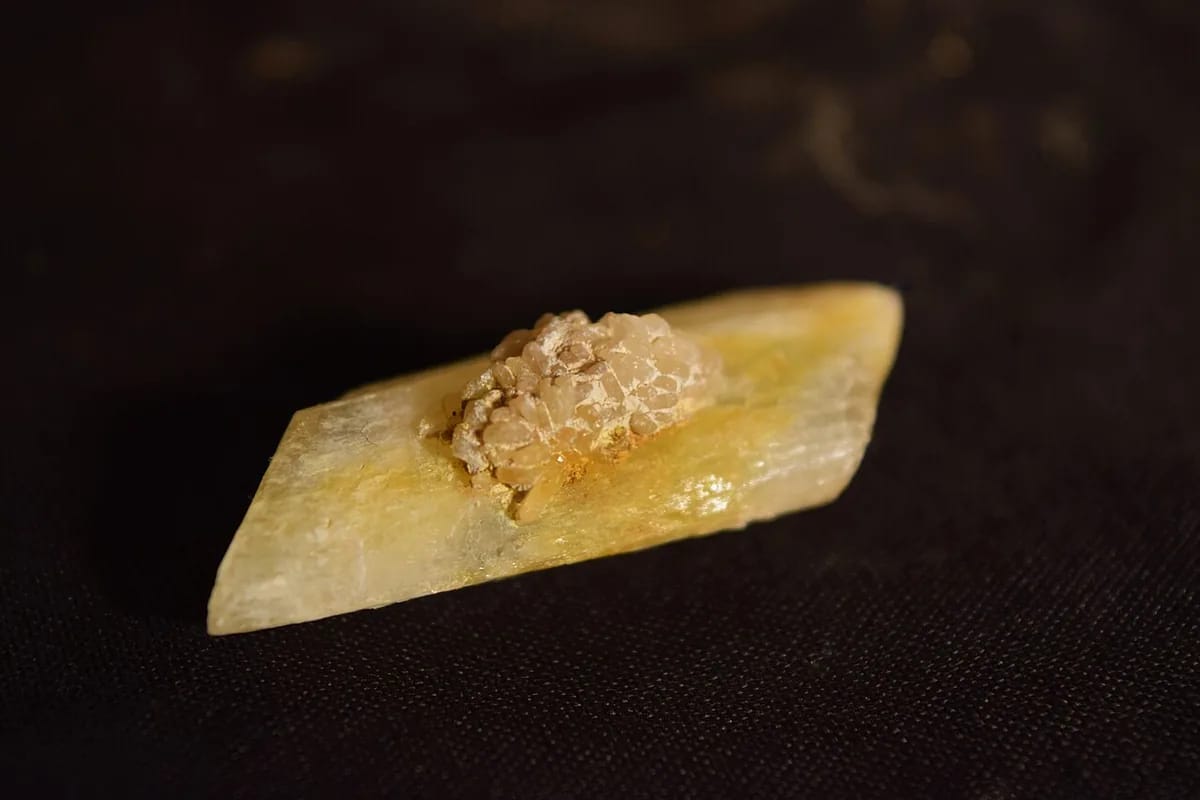
Selenite is the clear, crystalline variety of gypsum, famous for water-transparent crystals — including the giant beams of Mexico's Cave of Crystals.
About Seleniteextended article
Selenite is the transparent, well-crystallised variety of gypsum (hydrated calcium sulfate). It forms glassy, colourless to white crystals that can be astonishingly clear, as well as the fibrous, silky form known as satin spar and the bladed rosettes called desert roses.
Identifying selenite
Selenite is very soft — just 2 on the Mohs scale, scratched with a fingernail — and has one perfect cleavage that produces flat, flexible sheets. It is light, often water-clear, with a pearly to glassy lustre. Because it is soft and slightly water-soluble, it needs gentle, dry handling.
Where it is found
Gypsum is widespread in evaporite deposits worldwide. The most spectacular selenite comes from the Naica mine in Chihuahua, Mexico, whose Cave of Crystals holds some of the largest natural crystals ever found — translucent beams metres long. Fine selenite also comes from Morocco, the United States and many other localities.
For collectors
Clarity, crystal size and undamaged terminations drive value; satin spar is widely cut and carved, and desert roses are popular natural ornaments.
About Selenite
Selenite is the colorless to white transparent variety of gypsum, a hydrated calcium sulfate. It forms by evaporation in salt lakes, sedimentary basins, and hydrothermal cavities. The most spectacular known occurrence is the Cave of Crystals at Naica, Chihuahua, where megacrystals up to twelve meters long grew over hundreds of thousands of years in a heated brine pool. More accessible commercial sources include Mexico, Morocco, and the United States.
Identification & care
Selenite has a Mohs hardness of only 2 — it can be scratched with a fingernail. Specific gravity is 2.32. It cleaves perfectly in one direction, producing thin sheets that flex slightly without breaking. Other diagnostic features include a pearly luster on cleavage faces, vitreous on broken faces, perfect transparency in clean crystals, and complete water solubility — selenite must never be cleaned with water. Crystals are commonly tabular, prismatic, or twinned in fishtail form.
Collector context
Collector notes
Selenite is among the most affordable transparent collectible minerals because deposits are large and the material is soft enough to fabricate easily. Large terminated single crystals from Morocco and Mexico are common cabinet pieces. Premium material includes Naica giant-crystal-cave specimens (no longer collected for ethical and safety reasons), Spanish fishtail twins, and bladed satin spar from the United Kingdom. Care is critical — never wash with water, avoid humid environments, and handle by the matrix not the cleavage planes.
Frequently asked questions
What is Selenite?
Selenite has the chemical formula CaSO4·2H2O, crystallises in the Monoclinic system, has a Mohs hardness of 2. Selenite is the transparent, glassy variety of gypsum (CaSO4 2H2O), often forming long prismatic or fishtail twin crystals. The Naica giant crystal cave in Mexico is the most famous occurrence.
What is the chemical formula of Selenite?
The chemical formula of Selenite is CaSO4·2H2O.
What crystal system does Selenite belong to?
Selenite crystallises in the Monoclinic crystal system.
Where is Selenite found?
Notable localities for Selenite include Naica.
Is Selenite rare?
As a collector mineral, Selenite is generally considered common.
Related minerals
Looking for a Selenite specimen?
Our inventory is one-of-a-kind and turns over quickly. Tell us what you're after — species, size, budget — and we'll notify you when a matching Selenite arrives from our sourcing network.
Request this mineral