
Sunstone
Curated by Maggie Liu · Updated:
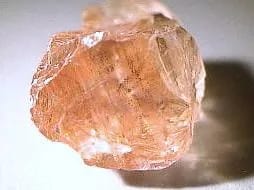
Sunstone is an iridescent variety of plagioclase feldspar containing tiny oriented platelets of copper or hematite that produce a metallic sparkle (aventurescence). Oregon and Norway are the classic sources.
About Sunstoneextended article
Sunstone is the gem variety of feldspar that shows aventurescence — a warm, metallic, glittering sparkle caused by light reflecting from countless tiny plate-like inclusions. In most sunstone the platelets are hematite or goethite; in the celebrated Oregon material they are microscopic flakes of native copper.
Properties
Sunstone may be a plagioclase (oligoclase to labradorite) or, less commonly, a potassium feldspar; it is hard (6–6.5) with the two good cleavages typical of feldspars. Oregon sunstone is prized because the copper also produces body colours from yellow through pink to rare green and the 'red' stones, sometimes with colour zoning.
Occurrence
Sources include Oregon in the United States, Norway (the historic locality), India, Tanzania and Russia. Aventurescent labradorite from several countries is also sold as sunstone.
About Sunstone
Sunstone is a member of the plagioclase feldspar series, ranging from oligoclase to labradorite in composition. The defining aventurescent flash comes from micron-scale platelets of native copper (Oregon material) or hematite/goethite (Norwegian material) suspended in the host crystal. These reflectors are oriented along specific crystallographic planes and produce the characteristic shimmer when light strikes the right angle.
Identification & care
Sunstone has a Mohs hardness of 6 to 6.5 and a specific gravity around 2.62 to 2.65. Cleavage is good in two directions at near-right angles, fracture conchoidal to uneven, luster vitreous to pearly. The diagnostic feature is the aventurescent flash, visible as glints of red, gold, or green within an otherwise transparent to translucent host crystal. Oregon copper sunstone often shows a continuous red color in addition to the flash.
Collector context
Collector notes
Oregon sunstone from the Ponderosa and Spectrum mines is the most prized variety, with collector grade material showing strong red-to-green color shifts and visible copper schiller. The Norwegian (Tvedestrand) hematite-included material is the historic source described in early mineralogy texts. Indian sunstone is more abundant, less expensive, and usually shows weaker aventurescence. Sunstone is a cabinet- to thumbnail-scale collectible — large transparent terminated crystals are rare.
Frequently asked questions
What is Sunstone?
Sunstone has the chemical formula (Ca,Na)(Al,Si)4O8, has a Mohs hardness of 6–6.5. Sunstone is an iridescent variety of plagioclase feldspar containing tiny oriented platelets of copper or hematite that produce a metallic sparkle (aventurescence). Oregon and Norway are the classic sources.
What is the chemical formula of Sunstone?
The chemical formula of Sunstone is (Ca,Na)(Al,Si)4O8.
Related minerals
Looking for a Sunstone specimen?
Our inventory is one-of-a-kind and turns over quickly. Tell us what you're after — species, size, budget — and we'll notify you when a matching Sunstone arrives from our sourcing network.
Request this mineral