
Hetian (Khotan) Jade District
Curated by Maggie Liu · Updated:
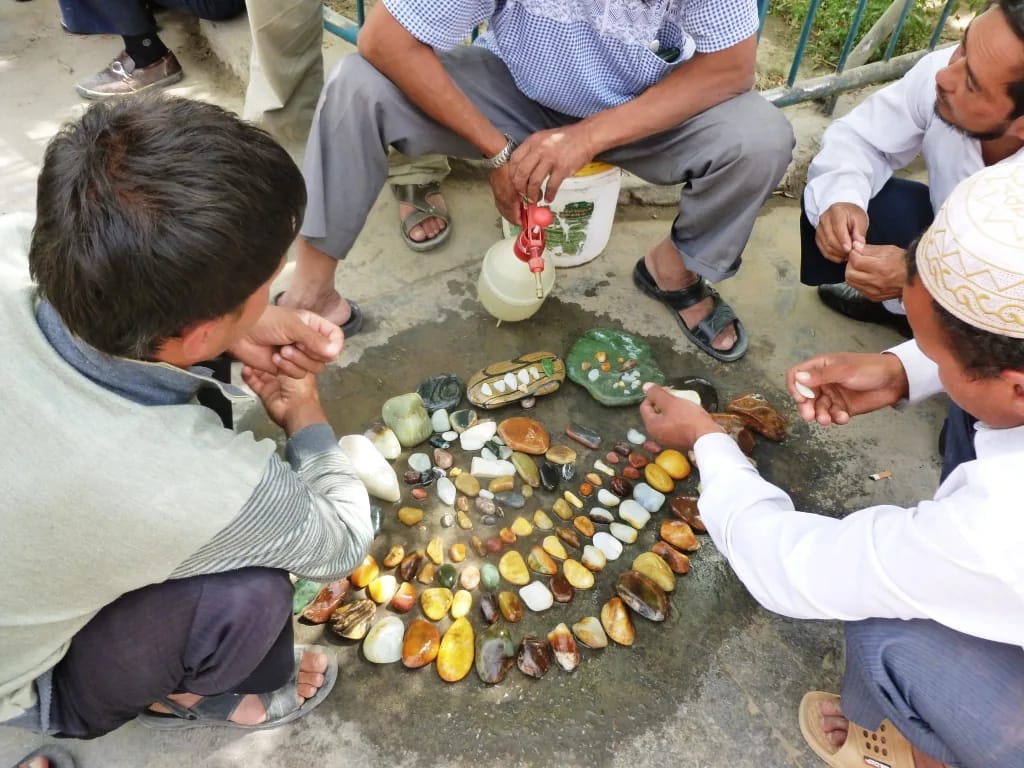
The Hetian (和田, Khotan) district in Xinjiang is the world-famous source of nephrite jade, prized in Chinese culture for thousands of years and the origin of the celebrated white "mutton-fat" jade.
About Hetian (Khotan) Jade Districtextended article
The classic source of Chinese nephrite jade
The Hetian (Khotan) region on the southern rim of the Tarim Basin in Xinjiang is the most renowned source of nephrite jade in the world. Nephrite — a tough, fine-grained tremolite–actinolite rock — has been treasured in Chinese culture for more than six thousand years, and Hetian material has long defined the highest standard for the stone.
What Hetian is known for
- White nephrite, including the prized "mutton-fat jade" (羊脂玉)
- River-pebble jade (籽料) recovered from the White Jade and Black Jade rivers
- Mined "mountain" jade (山料) from primary deposits in the Kunlun Mountains
Collector value
Colour, translucency, fineness of texture, and — for river pebbles — natural "skin" all drive value. Fine white mutton-fat nephrite is among the most valued of all jade and carries deep cultural significance for Chinese collectors.
Frequently asked questions
Where is Hetian (Khotan) Jade District?
Hetian (Khotan) Jade District is a mineral locality in Xinjiang, China. It lies at approximately 37.1000°N, 79.9300°E.
What minerals are found at Hetian (Khotan) Jade District?
Signature minerals from Hetian (Khotan) Jade District include Actinolite, Tremolite, Nephrite. The locality lies in Xinjiang, China, and each mineral links to a full reference entry with formula, crystal system, and collector notes.
What is Hetian (Khotan) Jade District known for?
The Hetian (和田, Khotan) district in Xinjiang is the world-famous source of nephrite jade, prized in Chinese culture for thousands of years and the origin of the celebrated white "mutton-fat" jade.
Looking for specimens from Hetian (Khotan) Jade District?
Our inventory is one-of-a-kind and turns over quickly. Tell us what you're after and we'll notify you when a matching Hetian (Khotan) Jade District specimen arrives from our sourcing network.
Request a specimen