
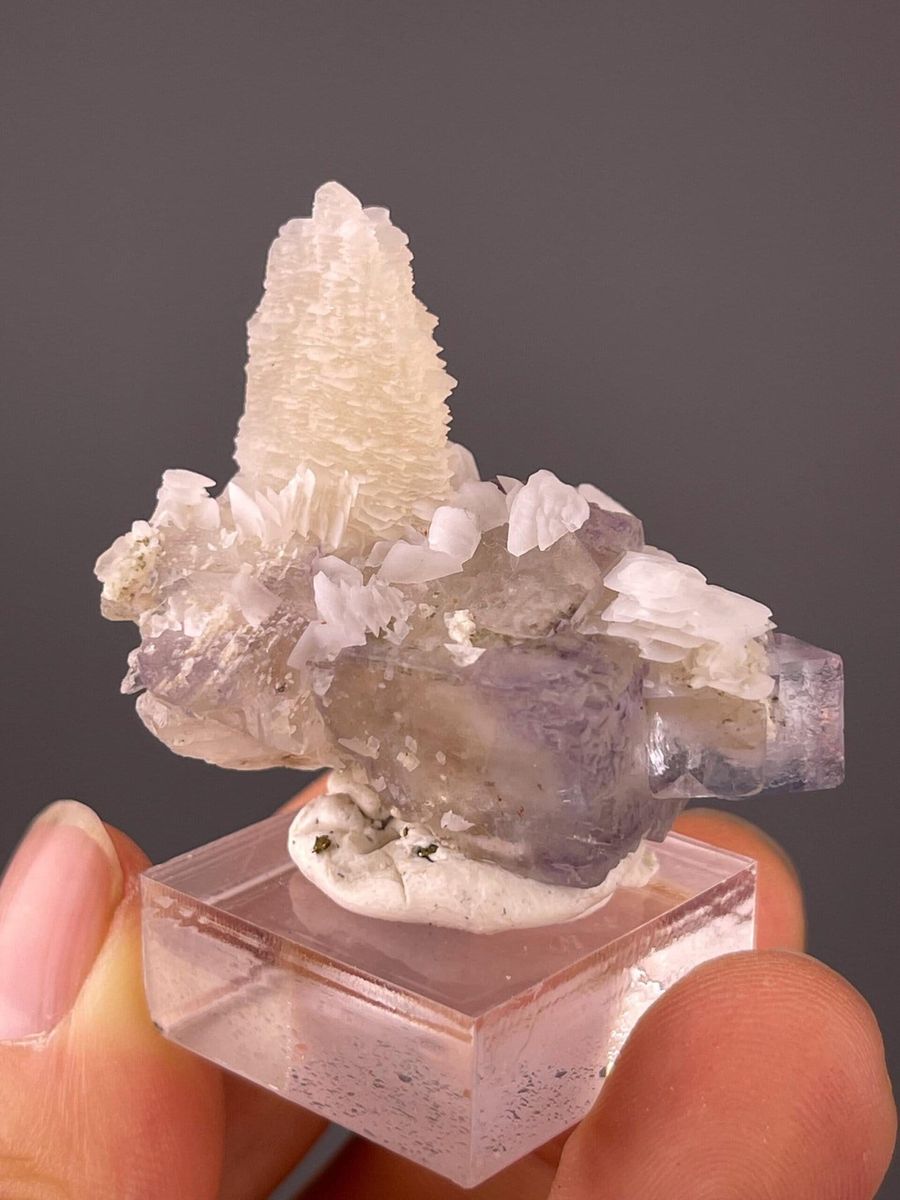
What candy and watermelon fluorite actually are
Neither name is a species or a formula — both are trade names. Fluorite is calcium fluoride (CaF₂), and in nature it shows up in a wide range of colors: purple, green, blue, yellow, colorless, and occasionally pink. Color zoning, where different bands of color sit inside one crystal, is completely normal for fluorite.
"Watermelon fluorite" refers to a specific look — green, purple and blue bands that resemble a slice of watermelon. "Candy fluorite" is looser: some dealers use it for genuinely multicolored (rainbow) fluorite, while others use it as a catch-all for very bright, uniform pink, orange and neon pieces. That second group is where most of the treated material hides.
Is watermelon fluorite natural?
Natural multicoloured fluorite exists, but the trade name alone cannot establish origin or treatment. The Uis occurrence record in the source list documents mostly massive green and blue fluorite; it does not document every three-colour banded item now marketed as "watermelon fluorite" or the claimed history of recent re-mining.
A worked shape does not make a piece fake, but it removes useful natural surfaces and can make treatment harder to judge. For a tower, sphere, or slice, ask for the rough source, treatment disclosure, and evidence linking that exact material to the stated locality.
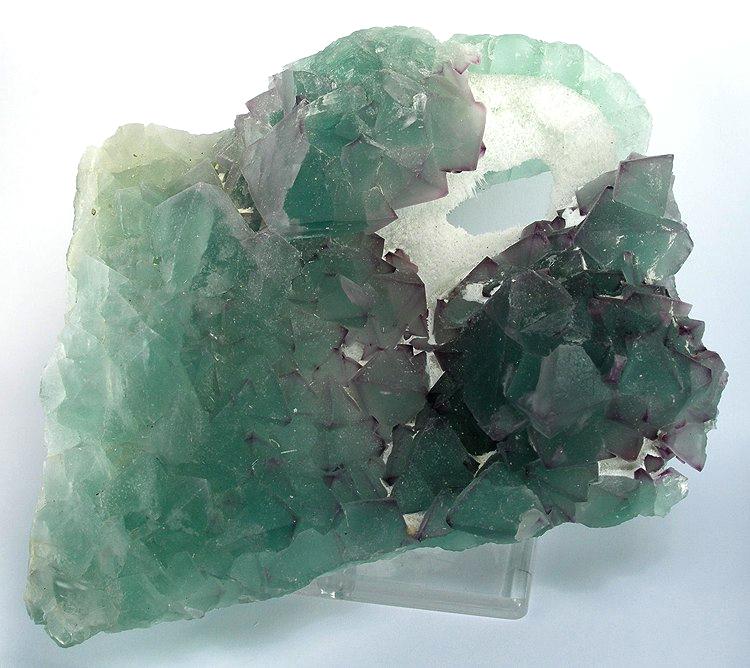
Is candy fluorite natural or dyed?
This is where we tell people to slow down. "Candy fluorite" is a marketing term, not a locality, so it tells you nothing about how the color got there. Naturally multicolored fluorite is real and common, and soft pastel shades are ordinary for the mineral. But a great deal of the intensely bright, uniform pink and orange "candy" material on the market is dyed or surface-coated rather than naturally colored.
The tell is saturation and evenness. Natural fluorite tends to vary in color across a piece, with gemmy zones and paler areas. When a whole cluster is one flat, glowing neon tone with no internal variation, we treat it as treated until proven otherwise. Dye also behaves differently from natural color, which is what the next section is about.
How to tell natural color zoning from dye
A few checks separate honest color from added color:
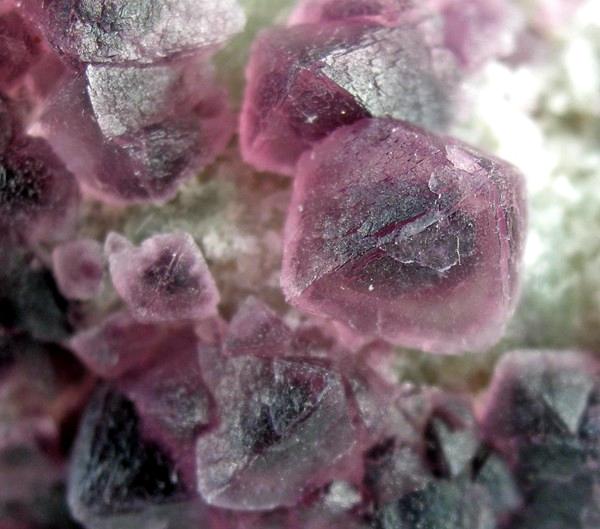
- Follow the geometry. Natural zoning lines up with the crystal's cube or octahedron faces and growth layers. Dye cuts across fractures and pools in cracks and surface pits instead of respecting the crystal shape.
- Look into the stone. Natural fluorite is often transparent with soft internal zoning. Dyed material shows color concentrated in dark veins and crevices while the flat faces stay paler.
- The swab test. On an inconspicuous, unpolished spot, rub a cotton swab dampened with acetone or alcohol. If color lifts onto the swab, the piece is dyed. Test raw areas, not polished faces, and go gently — acetone can dull a polish.
- Be wary of uniform neon. A single, even, glowing color with no zoning is a warning sign, especially in pink and orange.
- Ask the seller. Reputable dealers name the locality and state whether a piece is natural or treated. A confident, specific answer is a good sign.
What we buy — and what we skip
We consider multicoloured fluorite only when the seller states the locality and treatment status and can connect the claim to the actual rough. We skip vivid "candy" material with no locality or treatment disclosure, and we are cautious with polished towers and spheres, where natural surfaces have been removed.
Price is only a screening clue, not proof of origin or treatment. The safer path is a seller who names the source, distinguishes recorded occurrence data from a trade name, and states plainly whether the colour is natural.
Sources & evidence limits
These references support the specific points described below. A trade name, colour, photograph, price, or seller statement alone cannot prove treatment status or origin.
Frequently asked questions
Is watermelon fluorite real or man-made?
Natural multicoloured fluorite is real, but "watermelon fluorite" is a trade name rather than a species, locality, or treatment guarantee. Uis has a recorded green-and-blue fluorite occurrence; that record does not authenticate every banded tower or sphere sold under the name. Ask for the rough source and treatment disclosure.
Is candy fluorite dyed?
Often, yes. "Candy fluorite" is a marketing name, not a mineral or a locality. Naturally multicolored fluorite exists, but much of the very bright, uniform pink and orange "candy" material is dyed or coated. Even color zoning, a named source and a disclosed treatment status are good signs a piece is natural.
How can I tell if fluorite is dyed?
Check whether the color follows the crystal's faces and growth zones (natural) or pools in cracks and surface pits (dyed). On an unpolished, hidden spot, a cotton swab with acetone can lift dye — color on the swab means it has been treated. A uniform neon color with no internal zoning is another warning sign.
Where does natural watermelon fluorite come from?
Uis in Namibia is one documented green-and-blue fluorite occurrence, but the public record describes mostly massive material and does not validate every three-colour item sold as "watermelon fluorite." Treat the name as a visual trade term and require provenance for any mine-level claim.