
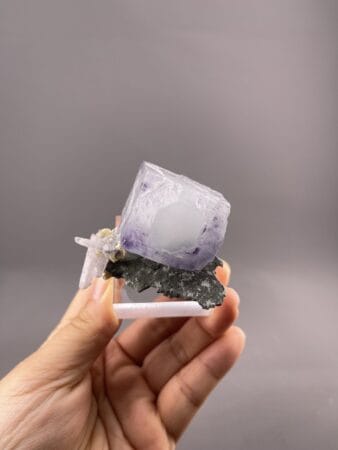
Why fluorite is special
Cubic crystal system + perfect octahedral cleavage + naturally clear when pure + accepts virtually any trace element to produce color. Fluorite's name gave us the word fluorescence — the British physicist George Stokes named the phenomenon after observing it most strongly in a piece of fluorite. Many specimens fluoresce blue-violet under long-wave UV.
Color and zoning
Pure fluorite is colorless. Trace amounts of yttrium, cerium, and color centers produce the famous purple-blue-green color zoning of Yaogangxian. Pure yttrium and lanthanide combinations give the deep blue of Spain's Berbes Mine and the rare pink of the Swiss Alps. Phantoms — earlier growth stages preserved as internal color zoning — record the changing chemistry of the parent fluid over millennia.
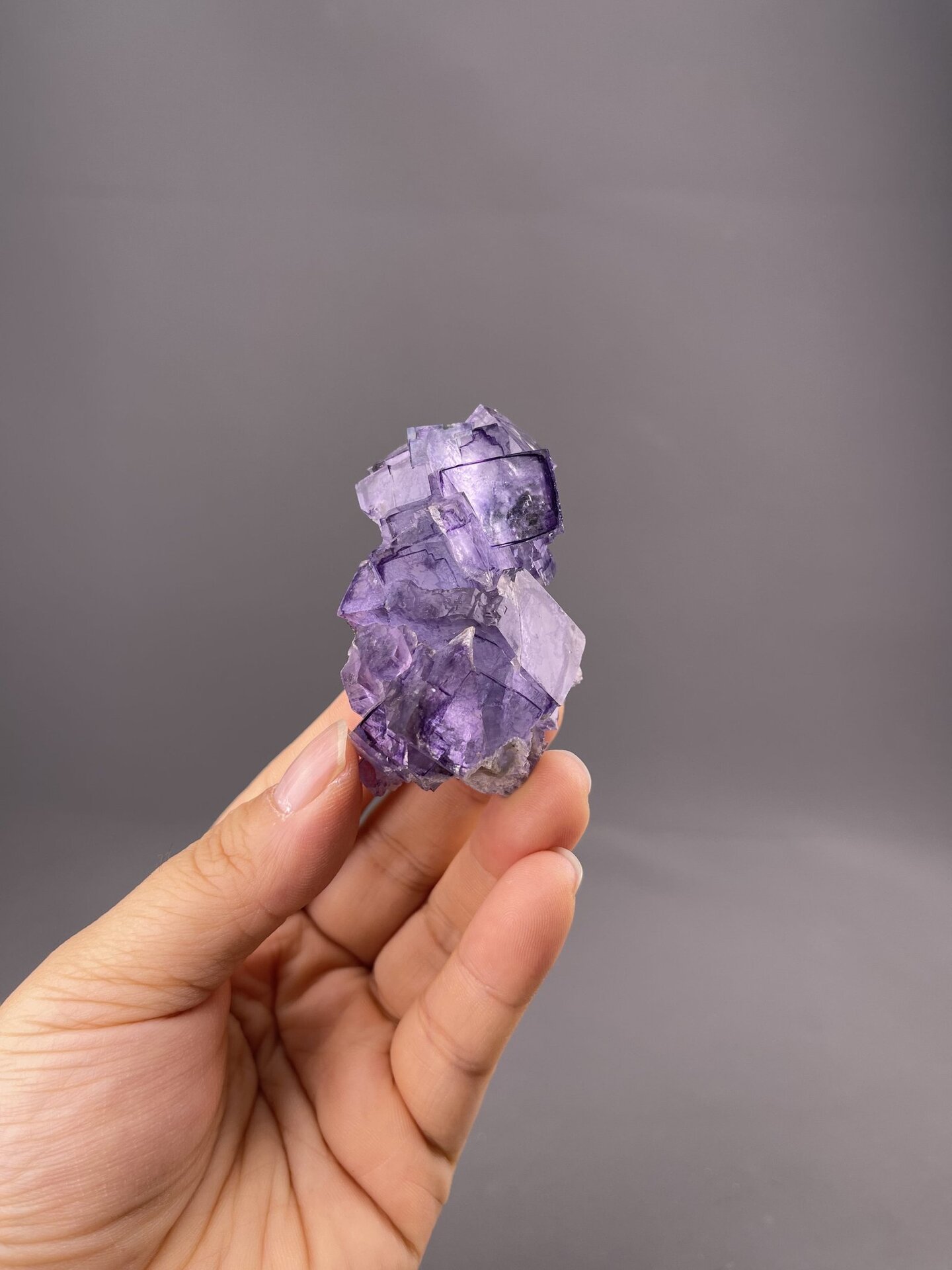
Collecting and care
Fluorite is hardness 4 — softer than steel — and has four perfect cleavages. Handle gently; a knock will produce a cleavage step. NEVER expose to direct sunlight or strong UV — purple and blue fluorite fade in months. Display behind UV-filtered glass or in a cabinet away from windows. The classic localities — Yaogangxian, Shangbao, Xianghualing, Cumbria, Berbes, Elmwood, Tennessee — each have a recognizable look.
Chinese fluorite localities to know
China is now the dominant source of fine collector fluorite, and the three Hunan classics anchor the market. Yaogangxian produces transparent cubes with concentric purple-and-green phantoms and the unique opaque 'porcelain blue'. Shangbao is known for brighter, gemmier grass-green cubo-octahedra, often perched on quartz. Xianghualing yields crisp white-to-colorless cubes that are valued for their clean geometry rather than vivid color.
Knowing these signatures helps you both identify unlabeled pieces and judge whether an asking price matches the locality. When a 'Chinese green fluorite' could be either Shangbao or Yaogangxian, the habit and associated minerals usually settle it.
How to judge fluorite quality
Four things drive a fluorite's grade: crystal completeness, color, transparency, and the cleanliness of the association. Because of the perfect cleavage, edge and corner damage is the most common defect, so examine every cube under raking light for steps and chips. Strong, well-saturated color and crisp zoning beat pale or muddy color, and gemmy transparency is prized except where, as with porcelain blue, the opacity is the point.
For combination pieces, the supporting matrix and accessory minerals should enhance rather than clutter. A single fluorite that has been cleaved off its base is generally worth less than a smaller crystal still sitting naturally on matrix.
Treatments, repairs, and red flags
Fluorite is occasionally coated, oiled to mask cleavage, or assembled, and damaged crystals are sometimes reattached so skillfully the repair is hard to see. Inspect terminations and edges closely, look for glue lines or filled cracks under bright light, and ask the seller directly whether the piece has been cleaned, treated, or repaired. Undisclosed repair is the single biggest hidden cost in fluorite buying.
Fading is a slower, self-inflicted risk: a vivid purple specimen left on a sunny shelf can pale over time. Buy from sellers who store material out of direct light, and continue that habit at home behind UV-filtering glass.
Frequently asked questions
Why does fluorite come in so many colors?
Pure fluorite is colorless, but its structure readily admits trace elements and develops color centers, so small amounts of yttrium, cerium and lattice defects can produce purple, green, blue and other hues. Multiple events during growth can stack these colors as zones and phantoms within a single crystal.
Does fluorite really fade in light?
Yes — strongly colored purple and blue fluorite can pale with prolonged exposure to direct sunlight or intense UV. Display specimens away from windows and behind UV-filtering glass to preserve the color.
How do I handle fluorite without damaging it?
Fluorite is fairly soft at hardness 4 and has perfect cleavage in four directions, so it chips and cleaves easily. Hold specimens by the matrix rather than the crystal, avoid knocking the edges, and cushion them well in storage.
Which fluorite localities are best for collectors?
Chinese mines such as Yaogangxian, Shangbao and Xianghualing in Hunan are leading modern sources, alongside historic localities like Cumbria, Berbes and the Elmwood/Tennessee fields. Each has a recognizable look in color, habit and association.