
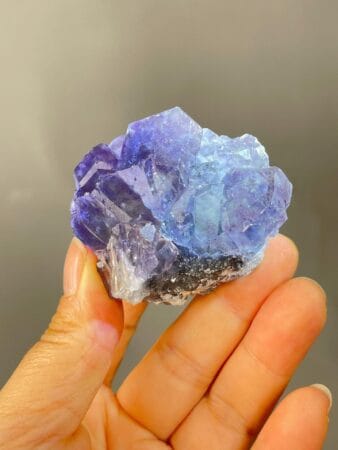
The structural classes
Nesosilicates — isolated tetrahedra (olivine, garnet, zircon, kyanite). Sorosilicates — two tetrahedra sharing one oxygen (epidote, hemimorphite). Cyclosilicates — rings (tourmaline, beryl, cordierite). Inosilicates — single chains (pyroxenes) or double chains (amphiboles). Phyllosilicates — sheets (micas, talc, clays, kaolinite). Tectosilicates — three-dimensional frameworks (quartz, feldspar, zeolites, the most common rock-forming minerals).
Why this matters for collectors
Each structural class has characteristic habits, cleavages, and optical properties. Phyllosilicates always cleave in one direction (the sheet) — micas peel into perfect basal plates. Inosilicate amphiboles cleave parallel to the chains, giving classic 56°/124° angles between cleavage faces. Tectosilicate quartz has no cleavage at all because the framework is fully interconnected.
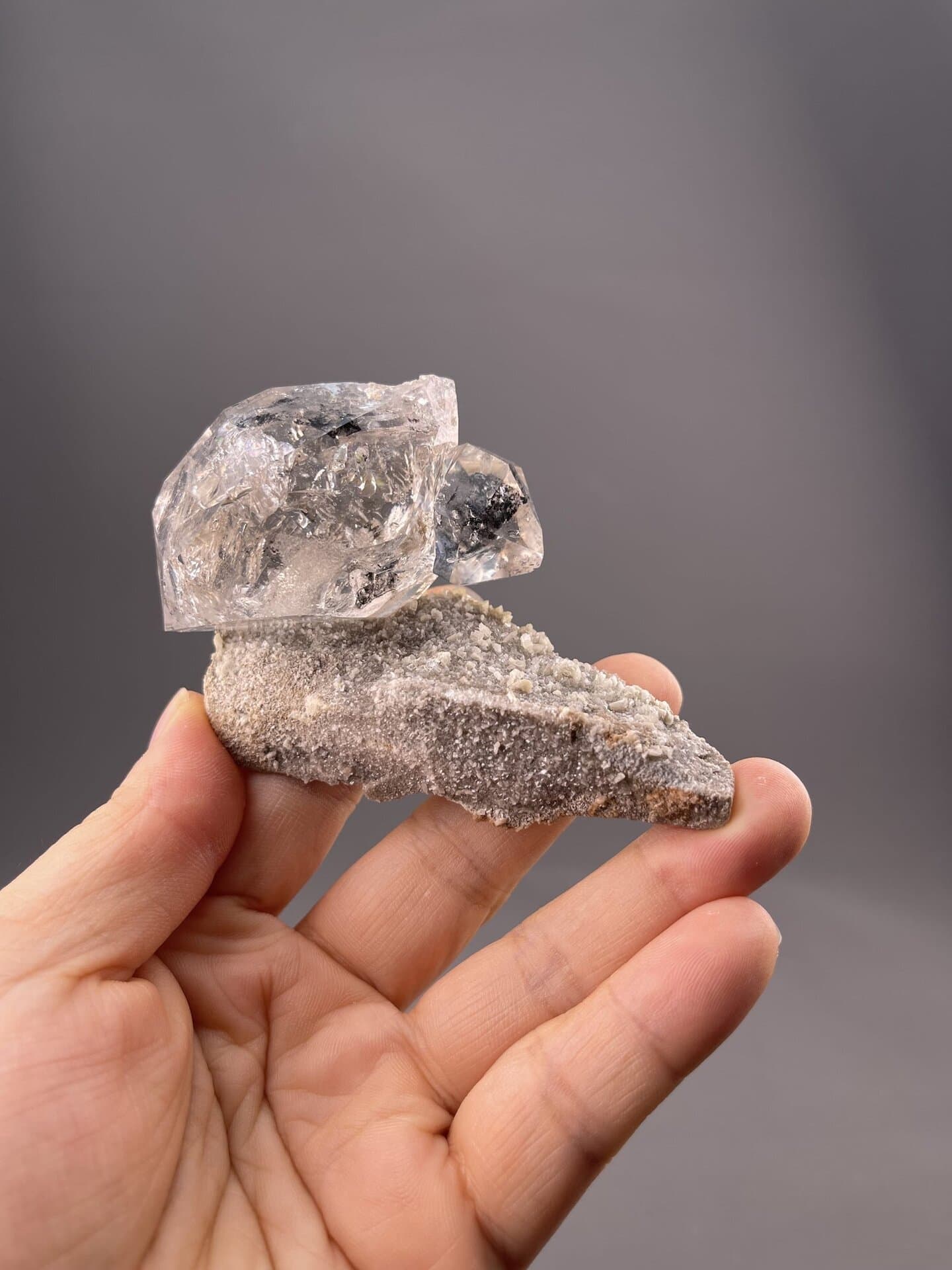
Common collector species
Garnet (nesosilicate). Zircon (nesosilicate). Tourmaline (cyclosilicate). Beryl — emerald, aquamarine, morganite (cyclosilicate). Pyroxene group — augite, diopside, spodumene (inosilicate). Amphibole group — hornblende, tremolite (inosilicate). Mica group — biotite, muscovite, lepidolite (phyllosilicate). Quartz — all varieties (tectosilicate). Feldspar group — orthoclase, plagioclase (tectosilicate).
Why the SiO₄ tetrahedron is the master key
Every silicate is a variation on a single building block: one small silicon atom nested among four oxygen atoms at the corners of a tetrahedron. Because silicon and oxygen are the two most abundant elements in the crust, this unit is everywhere, and the bond between them is strong — which is why silicates are generally hard, durable, and resistant to weathering compared with carbonates or sulfides.
The six classes are simply six answers to one question: how many corners does each tetrahedron share with its neighbors? Sharing no corners gives isolated units (nesosilicates); sharing all four corners gives a continuous framework (tectosilicates); the rest sit in between as pairs, rings, chains, and sheets. Once you internalize that single sliding scale of corner-sharing, the whole family organizes itself in your head.
How structure predicts cleavage and habit
The link between class and physical behavior is direct enough to use in the field. Sheet silicates (phyllosilicates) cleave on the plane of their sheets, so micas split into flexible plates and talc feels slippery. Chain silicates (inosilicates) cleave along the direction of their chains, producing the diagnostic two-direction cleavage of pyroxenes near 90° and of amphiboles near 56°/124° — a single observation that separates the two groups.
Framework silicates lack easy cleavage because bonds run equally in all directions: quartz fractures conchoidally rather than cleaving, while feldspars show two good cleavages set by weaknesses in the framework. A common misconception is that 'no cleavage' means a poorly crystallized mineral; in tectosilicates it is actually a sign of the strongest, most fully connected structure of all.
Silicate highlights from Chinese localities
Chinese mines supply some of the most collectible silicates on the market, spanning several of the six classes. Xuebaoding in Pingwu, Sichuan is famous for gem beryl — including aquamarine — perched on muscovite and associated with scheelite and cassiterite; beryl is a cyclosilicate and muscovite a phyllosilicate, so a single Xuebaoding plate can illustrate two classes at once. Tourmaline, another cyclosilicate, is also recovered from Chinese granitic pegmatite occurrences.
Other districts round out the picture. Garnet (a nesosilicate) and epidote-group minerals (sorosilicates) turn up in the skarn deposits associated with iron and polymetallic mining in regions such as Hubei and Inner Mongolia, often alongside the carbonates and sulfides those skarns are mined for. Building a small reference suite from Chinese material — beryl, tourmaline, muscovite, and a garnet — lets you hold examples of four different silicate architectures side by side.
Frequently asked questions
What makes a mineral a silicate?
A silicate is any mineral whose structure is built on the SiO₄ tetrahedron — one silicon atom bonded to four oxygens. The way those tetrahedra connect, from isolated units to continuous frameworks, defines the six structural subclasses.
Why are silicates so common?
Silicon and oxygen are the two most abundant elements in the Earth's crust, so the minerals built from them dominate it — roughly 90% by volume. Most ordinary rocks are made largely of silicate minerals such as quartz, feldspar, mica, and amphibole.
How can I tell a pyroxene from an amphibole?
Look at the angle between the two cleavage directions. Pyroxenes (single-chain inosilicates) cleave at close to 90°, while amphiboles (double-chain) cleave at roughly 56° and 124°. That cleavage-angle difference is the classic field test.
Are quartz and feldspar really in the same group?
Yes — both are tectosilicates, with SiO₄ tetrahedra linked into three-dimensional frameworks. The difference is that feldspars substitute aluminum for some silicon and add metals like potassium, sodium, or calcium, which gives them cleavage that pure quartz lacks.