
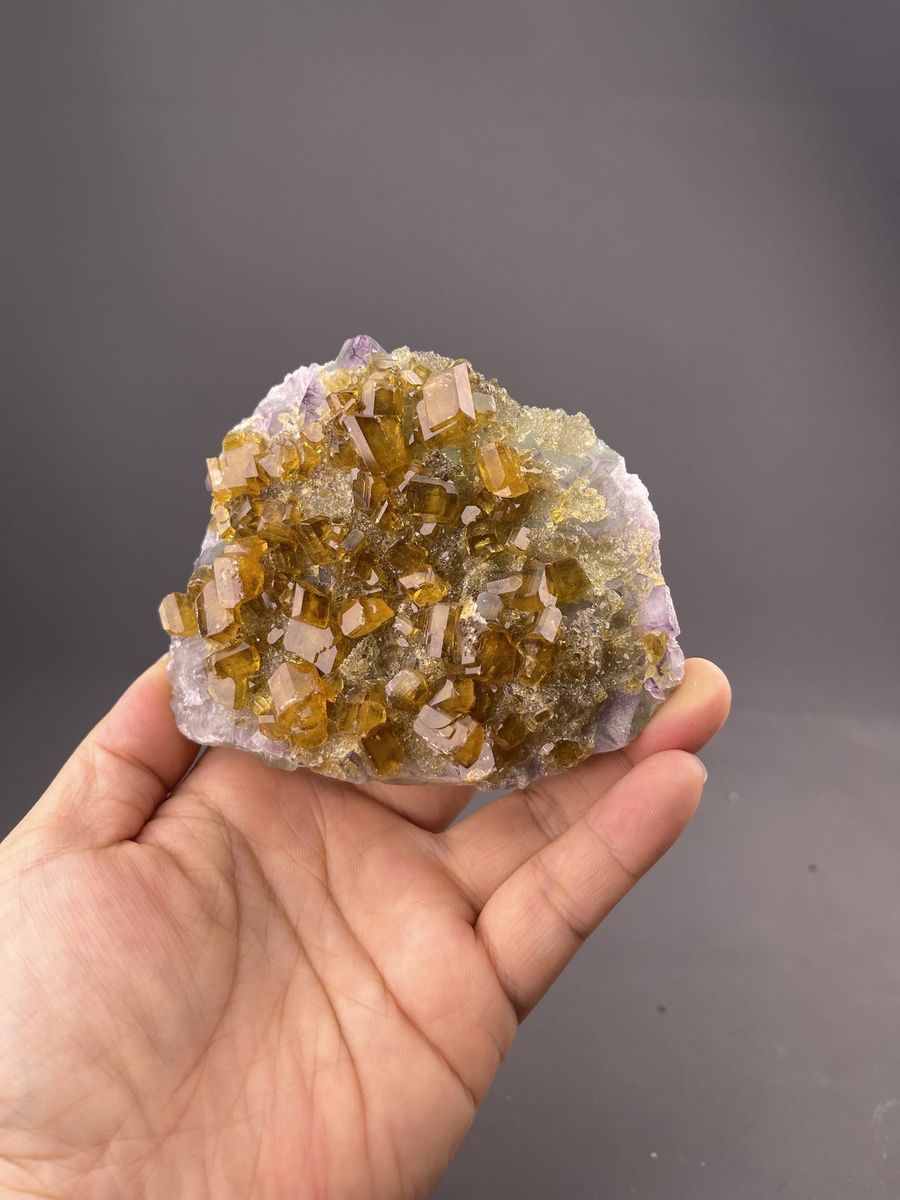
How streak works
Drag the mineral firmly across an unglazed white porcelain plate (typically the back of a bathroom tile). The line of powder that's left is the streak — the color of the mineral pulverized to powder. Body color is dominated by reflection and depends on grain size and surface; streak is intrinsic to the chemistry.
Classic streak separations
Hematite (any external color): red-brown streak. Magnetite (looks like hematite): black streak. Pyrite (gold cubes): greenish-black streak. Chalcopyrite (similar gold color, often iridescent): also greenish-black but darker and metallic. Galena: dark grey. Sphalerite: pale yellow to brown to black depending on iron content. Cinnabar: bright red.
Limits
Minerals harder than the porcelain (~6.5) won't streak — they just scratch the plate. Quartz, garnet, topaz, beryl, corundum: streak test impossible. Use other diagnostics. Also: streak only works on a CLEAN plate. Wipe between tests; a leftover red hematite streak will contaminate your next sample.
Building a complete field kit
A streak plate is the centerpiece, but a few cheap companions round out a kit that handles most identifications. Pack a 10x hand lens or loupe for crystal faces and cleavage, a steel pocketknife and a copper coin for quick hardness brackets, a small magnet for magnetite, and a dropper bottle of dilute hydrochloric acid to fizz-test carbonates like calcite.
Add a white and a black streak plate so dark streaks show on white and pale streaks show on black, plus a notebook for locality data — a specimen's value collapses without its provenance. Everything fits in a small pouch and costs little, yet together these tools resolve the great majority of field questions without a lab.
Streak-testing Chinese sulfides and oxides
Streak shines on exactly the metallic minerals that confuse beginners. Hematite from Chinese iron districts can look black and metallic yet always streaks red-brown, instantly separating it from true black-streaking magnetite. Cinnabar from the historic Wanshan mercury district in Guizhou gives a vivid scarlet streak that confirms it at once.
The gold sulfides need care: pyrite and chalcopyrite from Daye in Hubei both leave greenish-black streaks, so lean on hardness and tarnish to finish the call, since pyrite is much harder and chalcopyrite often shows peacock iridescence. Stibnite from Lengshuijiang in Hunan streaks lead-grey, but it is soft and brittle — press lightly so the bladed crystals do not crumble.
Common streak-test mistakes
The biggest error is testing a mineral that is harder than the plate: quartz, beryl, garnet, topaz, and corundum simply scratch the porcelain and leave a white groove of plate dust, which beginners misread as a 'white streak.' If the plate is being cut rather than the specimen, stop and identify by other means.
A contaminated plate is the next trap — a leftover red hematite mark will tint the next sample, so wipe or rinse between every test. Finally, judge streak in good light against the right background and look at the powder itself, not at any smear of softer coating dragged off the specimen's surface.
Frequently asked questions
What is a streak plate and what is it made of?
A streak plate is a piece of unglazed white porcelain — the unfinished back of a bathroom tile works perfectly. Because it is about Mohs 6.5, it abrades softer minerals into a powder line whose color is the diagnostic streak.
Why won't quartz or garnet leave a streak?
Both are harder than the porcelain plate, so instead of powdering they scratch the plate and leave white plate dust. For minerals above about Mohs 6.5 you have to identify by luster, cleavage, habit, and hardness rather than streak.
What should be in a beginner's mineral field kit?
A streak plate, a 10x loupe, a steel knife and copper coin for hardness, a small magnet, a dropper of dilute hydrochloric acid for carbonates, and a notebook for locality data. That inexpensive set resolves most common identification questions in the field.
How do I tell hematite from magnetite?
Run both across a streak plate: hematite always leaves a red-brown streak while magnetite leaves a black one. A magnet helps too, since magnetite is strongly magnetic and most hematite is not.