
Bournonite

Crystal system · Orthorhombic

Bournonite is a sulfosalt mineral recognized among collectors for its crystal form and distribution, with notable Chinese occurrences.

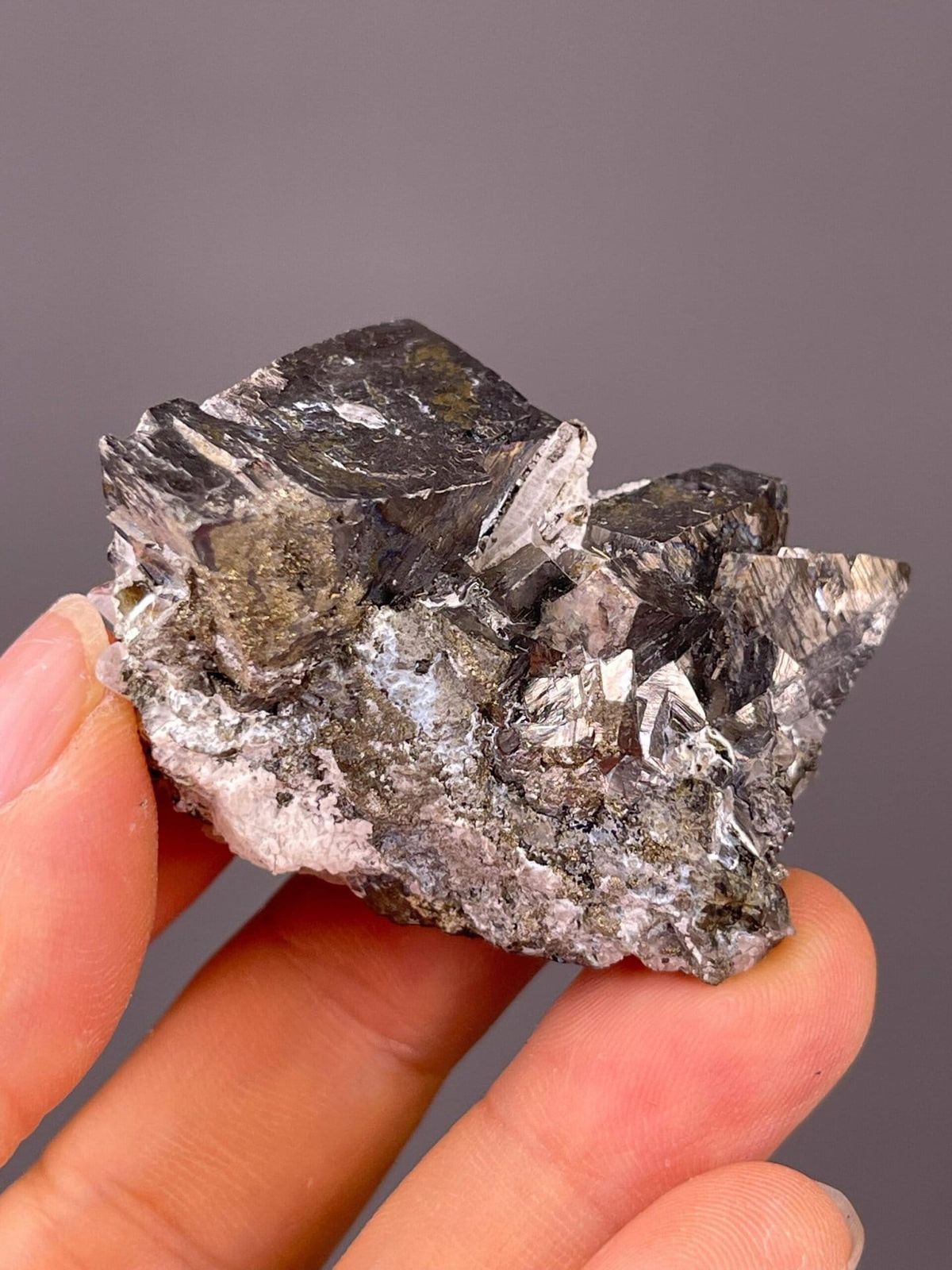
Bournonite cogwheel twin crystal China front view

About Bournoniteextended article

China-iconic

China is a defining locality for Bournonite · 车轮矿. See the Chinese collector page →

Market availability: Uncommon
Found at major shows and select dealers. Quality varies by locality.
Collector tier: Cabinet Classic
World-class display species — sought after for cabinet collections, well-documented localities, frequent show-piece pieces.
Often found withJamesonite · Pyrite · Galena · Tetrahedrite
Nickel–Strunz 2.GA.50
Dana 03.04.06.02
Crystal system
Orthorhombic

Bournonite is a lead-copper-antimony sulfosalt classically known as “cogwheel ore” (车轮矿) for its distinctive cyclic-twinned crystals that look like geared wheels. It is the single most architecturally distinctive sulfosalt species.

Occurrence in China

The Yaogangxian mine, Hunan is China’s premier bournonite locality, producing some of the world’s finest cyclic-twinned cogwheel crystals up to several centimeters across, often perched on quartz and chalcopyrite. Historic European localities include Cornwall (UK) and Neudorf (Germany).

Identification

Cyclic six-armed cogwheel twins on (110) are unmistakable when present. Without the twin morphology, distinguish from galena (cubic, brighter), jamesonite (fibrous/needle-like) and tetrahedrite (cubic tetrahedra).

Collector Notes

Bournonite specimens are valued by both metallic-mineral specialists and geometric/architectural-mineral collectors. Yaogangxian and Cornwall pieces top auction catalogs.

Export:BibTeXRIS
External research links for Bournonite
Published: May 6, 2026 · Last reviewed: May 6, 2026
Editorial standards & sources →

About Bournonite

Bournonite is a sulfosalt mineral in the bournonite group and has the chemical formula PbCuSbS3. It crystallizes in the orthorhombic system and is relatively soft, requiring careful handling. Its combination of structural character and global distribution make it a recognized species in both systematic and aesthetic collections.

Identification & care

Specimens usually show prismatic crystals; 'cog-wheel ore' — distinctive cruciform or gear-wheel shaped cyclic twins; tabular. Its color is typically steel gray, iron-black and lead-gray. The luster is metallic, sub-metallic, the streak is steel gray to black, and specimens are typically opaque. The cleavage is imperfect on {010}. The fracture is subconchoidal to uneven, which aids identification.

Collector context

How it forms

The geological setting for Bournonite is typically medium-temperature hydrothermal vein deposits with galena, sphalerite, tetrahedrite. It is commonly found in association with galena, sphalerite, tetrahedrite, chalcopyrite, pyrite, siderite, calcite.

Classic Chinese localities

Documented Chinese occurrences are recorded at Dachang ore field and Yaogangxian W-Sn ore field, among others.

Why collectors care

Collectors pursue Bournonite for the clarity of its crystal form and, in good material, saturated color that reads instantly across a display case. A well-terminated bournonite on clean matrix photographs well, identifies quickly, and anchors a cabinet piece. Top Chinese specimens over the last two decades have reset the bar for what bournonite looks like at collector grade.

What affects value

Value in Bournonite is assessed, in typical order of weight, against: (1) locality provenance; (2) size relative to the species norm; (3) crystal form and termination sharpness; (4) color saturation and zoning; (5) transparency and internal clarity; (6) matrix quality and aesthetic balance; (7) condition (absence of damage, chips, or repair). Cleaning quality and verified locality documentation act as multipliers across the above.

Naming history

The name Bournonite has a specific etymological and historical context — see Mindat's reference entry for provenance details. We have retained naming data at the record level; published prose is paraphrased from factual fields rather than copied from source.

Frequently asked questions

What is Bournonite?

Bournonite is a sulfosalt mineral recognized among collectors for its crystal form and distribution, with notable Chinese occurrences.

What is the chemical formula of Bournonite?

The chemical formula of Bournonite is PbCuSbS3.

What crystal system does Bournonite belong to?

Bournonite crystallises in the Orthorhombic crystal system.

Where is Bournonite found?

Notable localities for Bournonite include China.

Is Bournonite rare?

As a collector mineral, Bournonite is generally considered uncommon.

References & databases

Mindat.org is the world’s largest open mineralogy database. Our descriptions are written independently and fact-checked.

Available Bournonite specimens

1 specimen