
Bismuthinite
Curated by Maggie Liu · Updated:
Bismuthinite is a sulfide mineral known for its striking metallic crystals, with known Chinese sources.
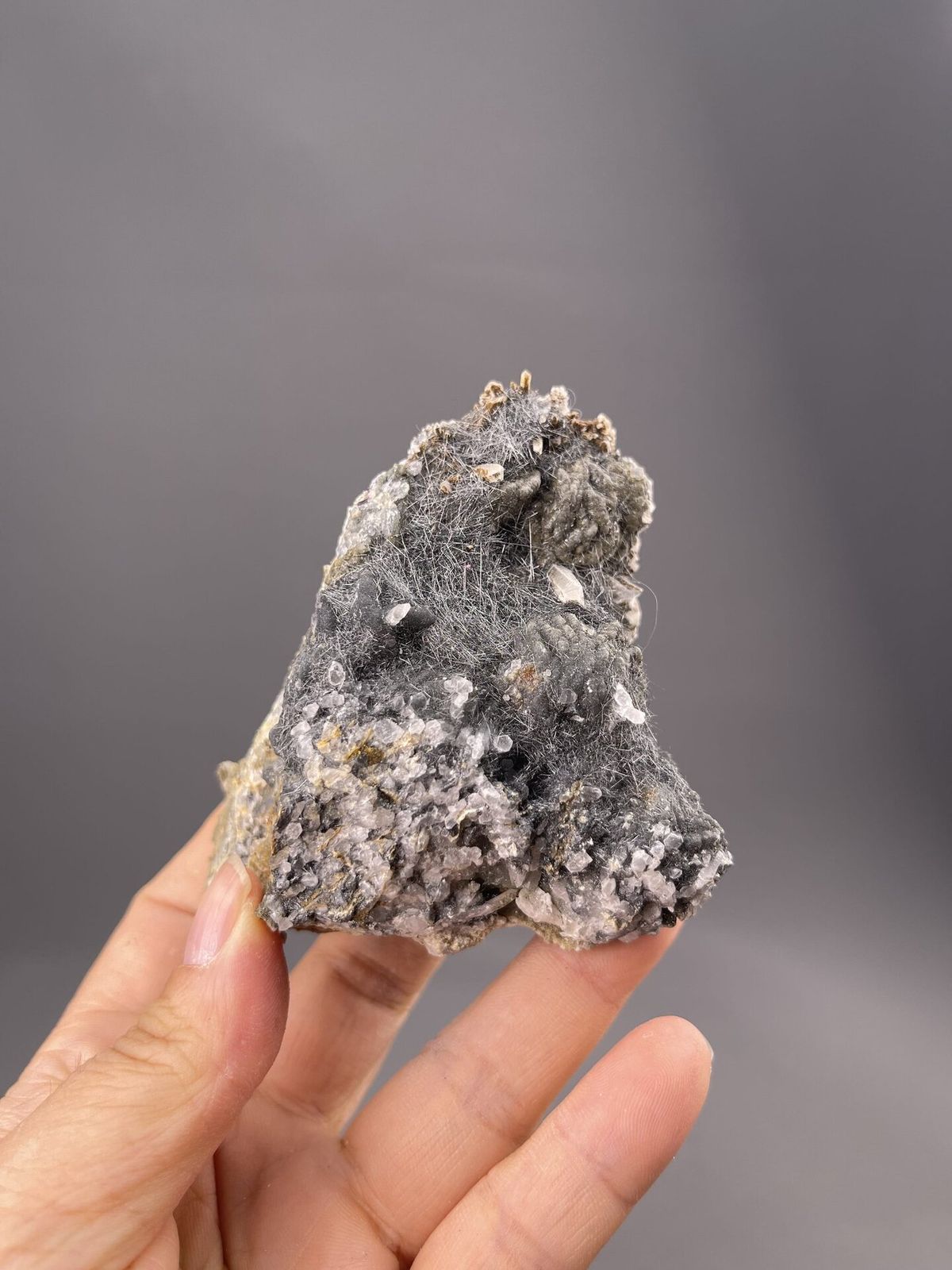
Bismuthinite is bismuth sulfide (Bi₂S₃), a lead-grey metallic mineral of bladed and needle-like crystals, found in China's tungsten-tin-bismuth veins such as Yaogangxian in Hunan.
About Bismuthiniteextended article
Bismuthinite is the principal sulfide ore of bismuth. It forms elongated, bladed to acicular (needle-like) crystals with a bright metallic, lead-grey to tin-white colour and a tendency to bend and striate along their length. It is a characteristic mineral of high-temperature hydrothermal vein systems.
Identifying bismuthinite
Bismuthinite is soft (2) and heavy, with a metallic grey colour, perfect lengthwise cleavage and flexible, striated blades. It can resemble stibnite (antimony sulfide) but is denser and associated with very different minerals. It crystallises in greisen and quartz veins, often with wolframite, cassiterite, molybdenite and arsenopyrite.
Where it is found
Bismuthinite occurs in the tungsten-tin-bismuth vein deposits of southern China — notably the Yaogangxian mine and related W-Sn districts of Hunan Province — embedded in or perched on milky quartz with wolframite. Other classic sources include Bolivia, Portugal and Australia.
What collectors look for
Bright, undamaged metallic blades, and aesthetic specimens of bismuthinite spraying across or perched on white quartz with wolframite, are the most collectable. Crystal size and lustre drive value.
About Bismuthinite
Bismuthinite belongs to the sulfide class in the stibnite group and has the chemical formula Bi2S3. It crystallizes in the orthorhombic system and is relatively soft, requiring careful handling.
Identification & care
Bismuthinite typically forms prismatic, acicular crystals; striated along length; massive; lamellar; bladed. Its color is typically lead gray, tin-white and yellowish or iridescent on tarnished surfaces. The luster is metallic, splendent, the streak is lead gray, and specimens are typically opaque. The cleavage is perfect on {010}. The fracture is uneven, which aids identification.
Collector context
Collector notes
Bismuthinite is valued by collectors for its distinctive metallic presentation. Bismuthinite has known Chinese occurrences in Guizhou.
Frequently asked questions
What is Bismuthinite?
Bismuthinite has the chemical formula Bi2S3, crystallises in the Orthorhombic system. Bismuthinite is a sulfide mineral known for its striking metallic crystals, with known Chinese sources.
What is the chemical formula of Bismuthinite?
The chemical formula of Bismuthinite is Bi2S3.
What crystal system does Bismuthinite belong to?
Bismuthinite crystallises in the Orthorhombic crystal system.